Amsterdammer · week 43
Dokter Co (89): the man who has spent his whole life standing up for people nobody sees
He damaged fighter jets in protest against war, went to prison, helped spark a refugee movement and, at 89, still repairs bicycles for people with no money. A portrait of Co van Melle.
The doctor on his old Batavus
It is March 2026. An old green Batavus bicycle makes its way through Amsterdam Nieuw-West. The gears no longer work as they should. The bike creaks, but it still takes its owner wherever he needs to go.
In the saddle sits Co van Melle. He is 89 years old.
He cycles past the Sloterplas lake to a temporary asylum seekers' centre at a former sports complex. He has arranged to meet Helen there.
At the entrance, a security guard asks which organisation he is from. Co tries to explain who he is. Then Helen appears, in red socks and flip-flops. She greets him warmly. She is glad her doctor has come.
But today she does not need medical help. Her bicycle is broken.
Co turns her Gazelle upside down, examines the tyre and concludes that it needs a new inner tube. He will bring one next week.
It is one of the small scenes from an NRC report by Anne-Martijn van der Kaaden on 5 March 2026. A man of 89 with a medical degree, on his knees repairing a refugee's bicycle.
To Co, that is not a strange combination. If someone needs help and he can do something, he does it. And that is how it has been for pretty much his whole life.
A doctor who chose a different path
Co grew up in Utrecht. He studied medicine and moved to Amsterdam to specialise in paediatrics. There he built a life, had a daughter and lived for many years in Amsterdam-West.
A future as a doctor seemed the obvious course. A practice, patients, a steady income. But Co was never concerned with medicine alone.
Even as a student he became involved in the peace movement. The Cold War dominated the world news and the threat of nuclear weapons made a deep impression on him. Co demonstrated, campaigned and resisted what he saw as injustice.
For him, being against something did not just mean talking about it. Sometimes, he believed, you also had to actually do something. That conviction would eventually land him in prison.
The night of the fighter jets
New Year's Eve, 1988 into 1989. While the Netherlands celebrated the new year, Co van Melle and the Catholic priest and peace activist Kees Koning broke into Woensdrecht air base.
Parked there were NF-5 fighter jets that the Netherlands was due to hand over to Turkey. The two men were protesting against the Turkish state's treatment of the Kurdish population. They feared the aircraft would be used in military violence.
Using an axe, among other things, they damaged two of the planes. The action made national news. Co and Kees were arrested and each sentenced to six months in prison.
To their supporters it was a principled act of resistance against war and oppression. Others saw it as unacceptable destruction of military equipment. Co was prepared to serve the sentence.
But the consequences reached further than his prison term. The episode would profoundly change both his personal life and his work in society.
The journey to Turkey that changed everything
After his release, Co travelled to Turkey with a delegation. There he met people who had faced political persecution, torture and harsh trials. The world he had protested against from the Netherlands now had faces and names.
Much changed in his private life too. His previous relationship had broken down. Through his involvement with Turkey he met a Turkish woman who was also active in the fight against torture. They fell in love, married and settled in Amsterdam-Noord. Together they had a son.
In a lengthy interview with De NoordAs, Co later described how formative that period had been for him. His life could no longer be neatly divided into work, private life and activism. And his attention shifted more and more towards people living on the margins of society.
The doctor without a waiting room
Amsterdam is a city of extremes. Of monumental canal houses, expensive restaurants and packed terraces, but also of people sleeping in garages, empty buildings or on the street. Many Amsterdammers barely ever see that last world. Co came to know it up close.
He became involved with De Witte Jas (The White Coat), an organisation of medical volunteers who helped uninsured people. Later he worked at Kruispost, among other places, and held his own surgery hours in De Pijp.
On the NDSM site he treated Turkish workers in sewing workshops. They often had barely any money and no easy access to regular medical care. Co asked them what they could spare. Sometimes that was little. Sometimes nothing. During that period he himself was living on benefits.
Gradually his work became less that of a traditional doctor with a fixed consulting room and more that of someone who went out to his patients himself. His patients sometimes had no GP, no insurance, no residence permit, or not even an address.
Because what do you do when someone needs a hospital appointment but has no postal address? How do you arrange medication when someone has no money? And how do you build trust with someone who is afraid of official bodies?
Co learned that good care sometimes begins not with a stethoscope, but with listening.
One refugee, one tent and an entire movement
The summer of 2012 would bring another turning point. Co regularly worked as a bicycle repairer in the basement of the Amsterdamse Protestantse Diaconie, the Protestant church's social welfare organisation in Amsterdam.
One day he found a rejected asylum seeker outside. The man had nowhere to sleep. Co decided to help. He arranged a sheltered spot and put up a tent.
Word spread among others in the same situation. Within about two weeks, thirty young men were sleeping in the Diaconie's garden. What began as help for one person grew into something much bigger: it became one of the catalysts for the refugee movement We Are Here, also known as Wij Zijn Hier.
The movement was made up of people whose asylum applications had been rejected, but who could not or dared not return to their country of origin. Without residence permits, often without income and without a fixed place to live, the group moved between tent camps, empty churches, offices, garages and schools. The Vluchtkerk (Refuge Church) and the Vluchtgarage (Refuge Garage) became well-known names in Amsterdam's history of shelter and protest.
Co stayed involved. He came by on his bicycle, cared for the sick, helped with medication, arranged appointments and listened to their stories.
In 2023 Co looked back on that period. He called it the most important experience of his life. Not his medical training, his political actions or his prison sentence, but the moment when a group of people without homes became visible together in the city.
A consulting room in a rucksack
In May 2018, RTL Nieuws journalist Lisanne van Sadelhoff spent a day with Co. She met a man, by then 81, who cycled tirelessly around the city. His working day began at a shelter in Amsterdam-Zuid. From there he went on, from patient to patient.
In his rucksack he carried medical supplies and a collection of yellowed cards on which he kept his patients' details. His first-aid supplies were stored in a reused plastic tub that had once held hummus. It may well have been the simplest mobile doctor's practice in Amsterdam.
During the report he met Khalid, a Libyan man with a lump on his forehead, for whom Co had arranged a medical appointment. He also visited a man of around thirty from Sudan who was suffering from stomach complaints. Co did not trust the symptoms and made sure he got medical help.
But it did not stop there. The man had to wait for further tests, and Co kept visiting him. That is what makes his work so special: he does not just see a patient who needs care at a particular moment, but a person who will still be waiting for a result next week and may be nowhere to be found a month from now.
Co tries to stay in touch. He phones, arranges appointments, looks people up and asks how they are doing. His patients do not always have an address. So the doctor goes looking for them himself.
The people he cannot save
Not every story has a happy ending. Some of the people Co meets have serious illnesses. Others live with mental health problems, trauma and prolonged uncertainty.
Co can organise help, approach a hospital or refer someone on. But he cannot simply arrange a residence permit, a home or a safe future.
A poignant example from the RTL report is that of a young man with a damaged tooth, for whom proper dental care was financially out of reach. For many Amsterdammers, a problem like that is solved with a single appointment. For people without money or papers, it can drag on for years.
Co knows the limits of his work. But that does not mean he stops. He keeps coming back.
He himself has barely any money
There is a striking contrast in the life of Dokter Co. For decades he has been helping people living in poverty, while he himself has never been well off.
In 2023 he told De NoordAs that he, his wife and his son lived on the AOW (the Dutch state pension) and a small private pension. Living frugally had become second nature. Even buying a book was not always possible.
That sets his story apart from that of someone who gives away part of their wealth from a comfortable position. Co mainly gives what he does have. Time. Knowledge. Attention. A bicycle repair. A listening ear. And sometimes a drawing.
The Amsterdammer with the sketchbook
Because besides being a doctor and an activist, Co is also an artist. He draws what he comes across on his way: the streets of Amsterdam, buildings, people and the small events of everyday life. Where others reach for their phone to take a photo, Co uses his pencil.
At home he works his drawings up further. His work has been exhibited and is also shown on the website of his foundation. Sometimes he swaps a drawing for a cup of coffee.
Music plays a big part too. Co is a pianist and plays in churches and care homes, among other places, often without being paid for it. According to his foundation, in recent years he has even come to see himself first and foremost as a musician.
The old doctor who rides his bicycle across Amsterdam is also a man who makes music and draws the world as he sees it.
When he was officially no longer allowed to be a doctor
In August 2018 Co suffered another setback. He lost his registration in the BIG register, the Dutch register of healthcare professionals, due, he says, to an administrative problem with his re-registration. He was no longer allowed to use the legally protected title of doctor and could no longer write prescriptions. Co was 82 by then.
He wanted to sit exams again to regain his registration. In the meantime, he stayed involved with his patients. When someone needed medication or treatment, he tried to get them further help through other doctors or the GGD, the municipal public health service.
He could no longer do everything he used to. But there remained plenty for which people needed him.
We have not established his current BIG registration status. His work as a helper, guide and confidant is separate from any authority to carry out medical procedures.
A film about a remarkable life
In 2017 the documentary Dokter Co, directed by Lysander Wiering, was released. The film follows Co on his visits to refugees in Amsterdam and goes with him to dilapidated garages and empty office buildings, where people try to survive in difficult circumstances.
The portrait shows not only his medical work, but also how important trust is. Co turns up in places where many people would not feel at ease, but where he has become a familiar face. For some residents, he is one of the few Dutch people who regularly come to see them in person.
January 2026: Amsterdam puts him in the spotlight
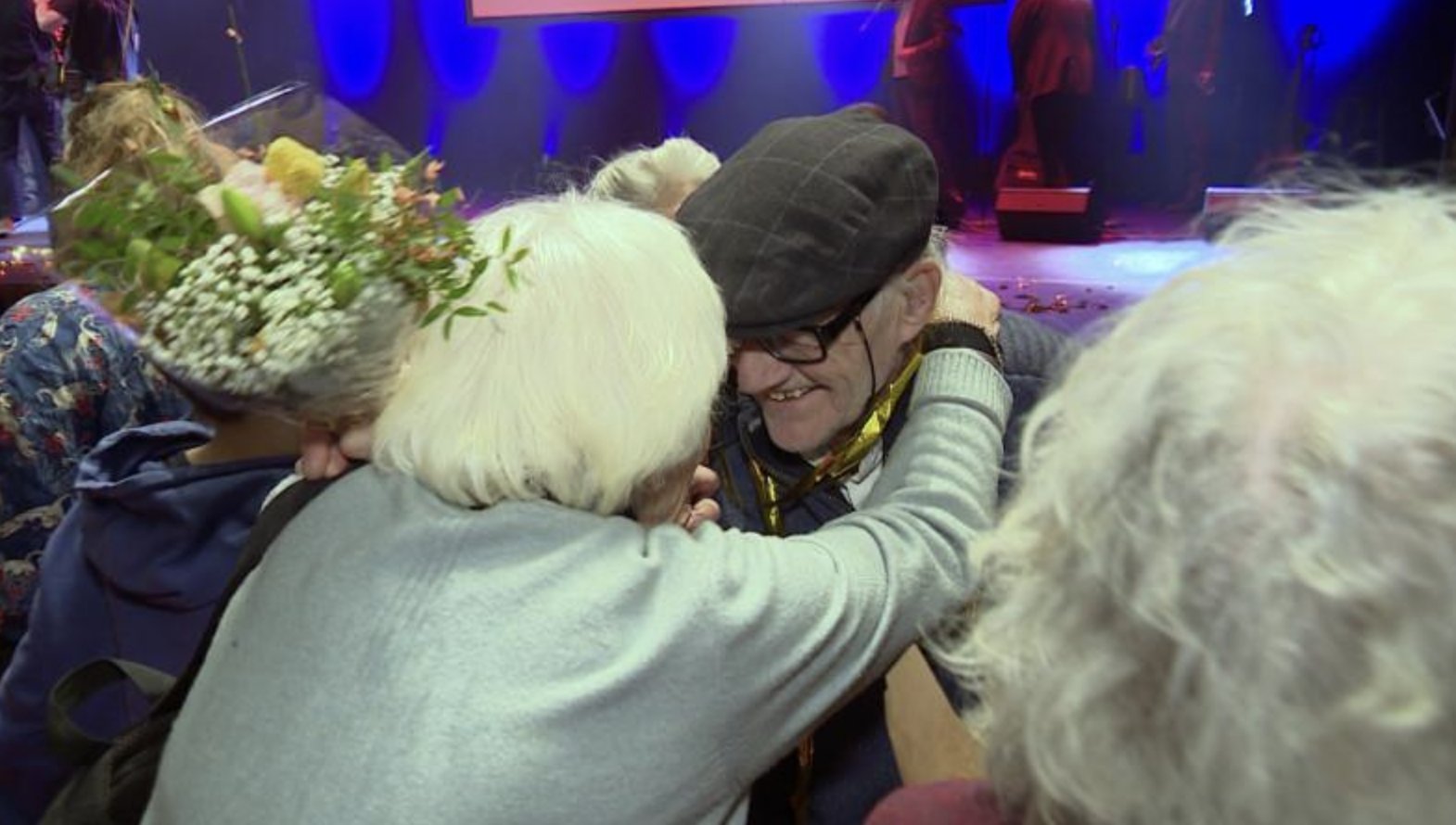
On 24 January 2026, Dokter Co stood on stage at the DeLaMar Theater. This time not as a doctor, volunteer or activist. This time it was about him.
Mayor Femke Halsema presented him with the title Amsterdammer van het Jaar (Amsterdammer of the Year), a joint award covering 2024 and 2025. Co received more votes than the four other nominees. The award came with a cheque for 1,500 euros.
For Co himself, the prize was above all a chance to draw attention to the undocumented people he feels connected to. And when he said something about the award, he immediately played down his own role.
We are all a bit of an Amsterdammer of the Year. From time to time.
A man who had done so much for others for so many years did not want to keep the honour to himself.
His story is not over yet
In the most recent extensive report about him, in NRC on 5 March 2026, he has not retired. He is not sitting at home looking back on his long life. He is cycling through Nieuw-West on his old Batavus, on his way to a woman with a broken bicycle.
It is a small story, but perhaps it says more about Co than all the major events of his life put together.
Co has of course been through changes. He is no longer the young activist breaking into an air base with an axe, and he no longer has the same medical powers he once had. But the conviction that has driven him all his life remains recognisable: if someone needs help, you do not look the other way.
A life that does not fit into one box
It would be easy to call Co van Melle simply Amsterdam's street doctor. But that would not do him justice.
He is the student who worried about nuclear weapons. The peace activist who was prepared to go to prison for his convictions. The man who was confronted in Turkey with stories of persecution and torture. The doctor who helped people without insurance or residence permits. The bicycle repairer whose single tent was at the root of a much bigger movement. The father, husband, artist and pianist. And the old Amsterdammer who still gets on his bike.
His life has its contradictions. His protest actions were controversial and had legal consequences. His ideals have not always given him an easy life personally. But one thread runs through all those chapters: he remains interested in people who are easily forgotten.
Perhaps that is what makes an Amsterdammer special
Amsterdam is a city where many people live close together, yet by no means always know each other. We cycle past one another, sit side by side on the tram and share the same streets without knowing what is going on in each other's lives.
Some people stand out, through their work, their fame or their success. Others become almost invisible. Co van Melle has spent his life seeking out that second group.
He does not always have the solution. He cannot take away every problem, and he cannot change the world on his own. But for someone who has nowhere to turn, it can mean a great deal when one person does come by. Someone who listens, helps and comes back next week.
With a new inner tube, if need be.
Sources
NRC (5 March 2026), De NoordAs (2 May 2023), RTL Nieuws (6 May 2018), the documentary Dokter Co (2017), Stichting Comité Ongedocumenteerden (Committee for Undocumented People foundation) and coverage of Amsterdammer van het Jaar (AT5 and NAP Nieuws, January 2026). This portrait is based on public sources and does not include a new interview. His current BIG status and activities after March 2026 have not been independently confirmed.
Comments (0)
Log in to leave a comment.
More stories about Amsterdam
All stories →
The siege of Felix Meritis: the day Amsterdammers turned on each other over a war 1,500 kilometres away
Redactie Amsterdammers.love · 17 min read

Zoë van der Meer (16): the girl who no longer dared go to school, and wrote a book about it
Redactie Amsterdammers.love · 10 min read
Vlieger: the Amsterdam paper shop that has refused to be ordinary for 157 years
Redactie Amsterdammers.love · 15 min read