Amsterdammer · week 40
Annick van Hardeveld (21): the Amsterdam woman shot dead on the day of liberation
On the night of 4 to 5 May 1945, a 21-year-old Amsterdam woman draped the Dutch flag around her shoulders. The war was almost over. In a few hours the Netherlands would be free. But Annick van Hardeveld still had one task to carry out. She put on her nurse's uniform, took her bicycle and set off through the dark streets of Amsterdam. She would never come home again. Her story is one of the most moving and least known chapters in the city's history.
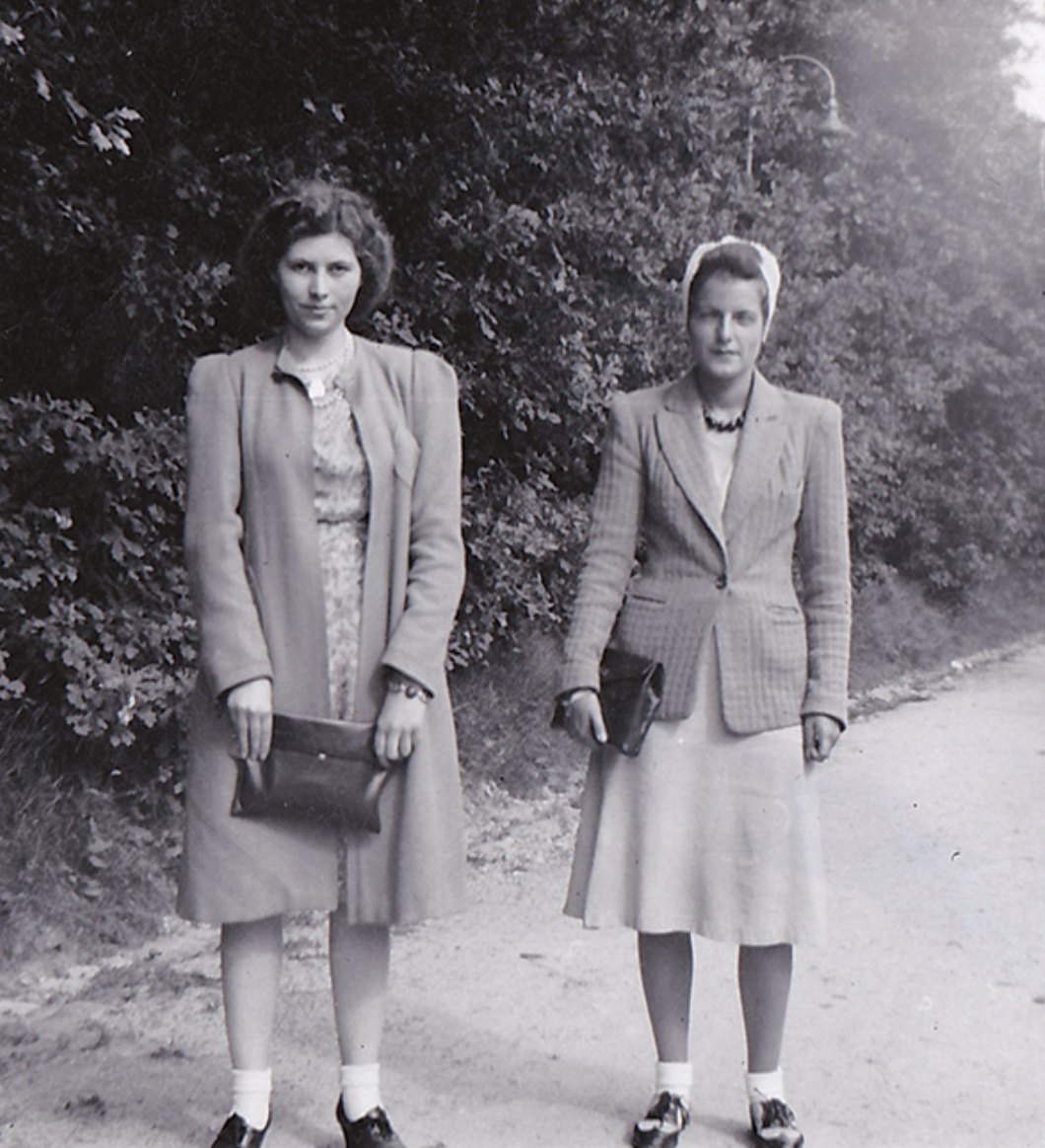
The girl from the Koninginneweg
Annick Germaine Mathilde van Hardeveld was born in Amsterdam on 9 November 1923. She grew up in a well-to-do family in Amsterdam-Zuid. Her father, Jan van Hardeveld, was an architect. Her mother, Germaine Bertin, came from Rennes in France. French was spoken at home. Annick had a brother, Yann, four years her junior. Within the family she was also known as Nini.
It was a Catholic family in which art, culture and education mattered. Annick was a cheerful girl, though she could be a little shy in company. Like many girls her age, she loved ordinary things. She went to the cinema, had friends and experienced her first crushes. She lived with her family at Koninginneweg 11.
A familiar address in Amsterdam-Zuid, in a neighbourhood where the war may at first have seemed somewhat distant. But when German troops invaded the Netherlands in May 1940, Annick was sixteen. Her youth would never be the same again.
A future as a nurse
In July 1942 Annick obtained her MULO diploma, from a type of Dutch lower secondary school. She did not yet know exactly what she wanted to become. She took a course at the Amsterdamsche Huishoudschool, a domestic science school, and then went to work as an office clerk at a clothing manufacturer. But she soon called it a day. The work did not suit her. Annick wanted something else. She chose healthcare.
She trained as a nurse and from 1943 worked at the Wilhelmina Gasthuis in Amsterdam. In wartime that was no easy environment. Hospitals faced shortages, wounded patients and the constant presence of the German occupier. Yet her new job offered something special. As a nurse, Annick was given a Red Cross identity card.
With it, under certain circumstances, she could travel through the city even during the curfew, when other civilians were not allowed on the streets. That document would become hugely important to her. Not only in her work at the hospital. But also in the secret life she began to lead without her family knowing.
The secret no one at home knew
Exactly when Annick became involved in the resistance is not entirely clear. It probably happened in 1943. She joined a resistance group that later became part of the Binnenlandse Strijdkrachten, the Dutch Forces of the Interior. The group was known as MAX III and had around forty members. For the resistance, communication was a matter of life and death. There were no mobile phones. Ordinary telephone calls could be tapped and letters intercepted.
Resistance groups therefore depended on people who could deliver messages in person. Female couriers played an important role in this. Annick became one of them. On her bicycle she carried messages from one address to the next. But it did not stop at letters. She also transported ration coupons, forged documents, weapons and ammunition. According to several historical sources, she sometimes even escorted people in hiding.
It was dangerous work. Anyone caught with forbidden documents or weapons risked arrest, imprisonment or death. Her nurse's uniform and Red Cross card offered some protection. But no one could guarantee her safety. At home Annick said nothing about her work. To her parents and younger brother she was the young woman who worked at the hospital. They did not know that she was regularly risking her life.
She wanted to do the same work as the men
Many stories about the Second World War focus on male resistance fighters. Men who hid weapons, prepared attacks or carried out sabotage. But women played an indispensable role too. They delivered messages, arranged food coupons, forged documents, hid people in hiding and kept different resistance groups in contact. Some women made use of the fact that German soldiers were less quick to suspect them of resistance work.
But the danger was no smaller. Annick did not want to limit herself to tasks that others considered safe enough for her. According to the recollections of her fellow resistance members, she was determined to take an active part. She wanted to carry out the difficult and dangerous assignments too. After the war her commander said that Annick was not easily held back.
If he had not taken her on, he expected she would have joined another resistance group. She had made her choice. And despite her young age, she wanted to count fully.
The Hunger Winter and waiting for liberation
In the winter of 1944 to 1945 the situation in Amsterdam became ever more hopeless. The Hongerwinter, the Hunger Winter, struck much of the western Netherlands. There was hardly any food. People left the city in search of potatoes or other provisions. Fuel was scarce. Homes were barely heated. More and more weakened people appeared on the streets. For the resistance, too, these were hard months.
But slowly hope arrived. The Allies were advancing. The south of the Netherlands had already been liberated. And in the spring of 1945 it became clear that Germany was going to lose the war. On 30 April Adolf Hitler took his own life. The news reached Amsterdam as well. The war that had dominated daily life for almost five years finally seemed to be over.
For Annick that must have been an extraordinary prospect. She had been sixteen when the war began. Now she was 21. Almost all of her coming of age had taken place during the occupation. At last a future seemed to be in sight in which she would no longer have to work in secret.
Friday evening, 4 May 1945
On Friday 4 May the news reached Amsterdam that the German capitulation was imminent. In the Van Hardeveld household on the Koninginneweg the relief was immense. Annick threw a Dutch flag around her shoulders. She danced for joy. After years of occupation, fear and uncertainty, liberation finally seemed to be becoming reality. But the war was not quite over yet.
There were still heavily armed German soldiers in Amsterdam. Not all of them were prepared to surrender without a fight. The Dutch Forces of the Interior therefore had to remain ready for possible fighting. Annick's resistance group had a plan ready in case the German commanders in Amsterdam refused to surrender. The members of the group were to gather at the Vossius Gymnasium, where a secret weapons store had been set up.
But not everyone had received the message. In particular, some members in Amsterdam-Noord still had to be warned. Annick was given the task of delivering the message.
The last bike ride
That night, while her parents and brother slept, Annick got ready. She put on her nurse's uniform. She took her Red Cross identity card with her. Her bicycle stood ready. It was a man's bike, according to a historical reconstruction with wooden wheels. She set off from the Koninginneweg towards the city centre. Her destination was Amsterdam-Noord. There she had to tell members of her resistance group to come to the Vossius Gymnasium, in case the German occupier did not surrender.
Annick probably expected to return safely after completing her task. After all, she had made dangerous journeys before. And liberation was so close. But somewhere in the night, on the Hekelveld near the Martelaarsgracht, things went wrong.
The shots on the Hekelveld
It was shortly after one o'clock in the night of 4 to 5 May 1945. Annick was cycling across the Hekelveld when a patrol of the German Grüne Polizei appeared. Suddenly shots were fired. Several bullets struck her from behind. She fell from her bike onto the pavement. A local resident, Jacobus Buijs, was woken by the noise.
From his home he saw what happened. He made notes in his diary. He described how the German policemen stood beside the fallen young woman. According to his account, some of the men reloaded their weapons. One of them shone a torch on Annick's body. A German asked whether she was dead. Then the men drove away.
Annick was left behind in the street. She was 21 years old. And the liberation of the Netherlands was only a few hours away.
A diary that stayed hidden for decades
The story of Annick's death could easily have been lost. But the eyewitness that night had written it down. After the war his diary disappeared from view. For decades the family did not know exactly what had happened in Annick's last minutes. Until it unexpectedly turned up at a book market in Weesp, among second-hand books. It turned out to contain an account of the night Annick was shot dead.
The diary described the shots, the German policemen and the young woman's body in the street. In 2010 the diary came into the hands of Annick's family. More than sixty years after her death, her relatives were finally able to reconstruct an important part of the events. For her brother Yann van Hardeveld and his daughter Annick, the find became the reason to record her story in detail.
In 2013 their book Annick van Hardeveld 1923–1945, een persoonlijke familiegeschiedenis (a personal family history) was published. The book was based on family memories, surviving letters, photographs, documents and testimonies. And so a young woman who had been killed at the age of 21 was given a face again, many years later.
The liberation that brought her family no celebration
On 5 May 1945 the German forces in the Netherlands capitulated. The population began to celebrate liberation. In Amsterdam, too, the joy grew. After five years of occupation, the war had finally come to an end. But at Koninginneweg 11 there was no celebration. Annick's parents and her brother Yann were told that their daughter and sister had been shot dead.
The Dutch flag that Annick had worn so cheerfully around her shoulders just a few hours earlier took on an entirely different meaning. According to a later historical account, her body in the mortuary was covered with that flag. While people cheered outside, her family was in deep mourning. The contrast could hardly have been greater. A whole city was looking ahead to freedom.
One family had lost its daughter for ever.
A funeral with military honours
On 9 May Annick's body was brought home. According to family sources, this was done on a bakfiets, a cargo bike, wrapped in the Dutch tricolour. Two days later, on Friday 11 May, her funeral took place. A solemn requiem mass was held in the Rozenkranskerk on the Obrechtstraat. Annick was then buried with military honours in Buitenveldert. Members of the Dutch Forces of the Interior accompanied the funeral procession.
Her resistance comrades were deeply affected. They had worked alongside her, carried out dangerous assignments and looked forward to the moment when the war would finally be over. Now they had to bury her. There is a remarkable photograph of the women with whom Annick had done courier work. They stand together, but an empty space has been left in the middle.
The place where Annick should have stood. It is an image that shows, without many words, what her death meant.
A brother who never forgot her
For Annick's younger brother Yann, the loss of his sister remained an important part of his family history throughout his life. He was still only a teenager when she died. What is more, during the war he had not even known that his sister was active in the resistance. Only after her death did it become clear how many dangerous assignments she had carried out.
In the years after the war the family kept her memory alive. Photographs, letters and other personal documents took on a special meaning. In 2013 Yann wrote the book about her life together with his daughter, who had been named after her aunt Annick. Not only to commemorate the resistance courier. But above all to show who Annick had been as a person.
A daughter. A sister. A friend. A young woman who enjoyed herself, had plans and had only just begun her adult life. Her story should not consist solely of the way in which she lost her life.
A forgotten woman gets a monument
For a long time Annick's story was known mainly to her family and former resistance comrades. But slowly it attracted more public attention. In 1981 she was posthumously awarded the Verzetsherdenkingskruis, the Resistance Memorial Cross. Four years later she was given her own monument in Amsterdam. On 4 May 1985 a memorial on the Hekelveld was unveiled by mayor Ed van Thijn. The monument was designed by the sculptor Hans Bayens.
It is not a huge war memorial. No tall statue towering over the city. But a modest memorial at the spot where Annick was shot dead. A place where every day people walk, cycle and pass by on the tram. Most of them will not know who she was. And perhaps that is precisely why the monument is so important.
Because without remembrance, personal stories easily disappear behind the great events of history. There is, incidentally, a remarkable detail about the monument. The original inscription gives 4 May 1945 as the date of her death. Historical research and the rediscovered diary, however, show that Annick was shot dead in the early morning of 5 May, at around 1.21 am.
A small difference in time. But an enormous difference in meaning. She did not simply die at the end of the war. She died on the day the Netherlands would celebrate its liberation.
The bike couriers who keep her name alive
Annick's story had another unexpected sequel. Not thanks to a government body or a museum. But thanks to a new generation of Amsterdam bike couriers. For years, couriers have organised an annual race in Annick's memory. A so-called alleycat: a bicycle race in which participants ride a route through the city. The race is called the Annick van Hardeveld Memorial Alleycat.
The participants ride through Amsterdam and finish at her monument on the Hekelveld. There they observe two minutes' silence. The memorial stone is then filled with red roses. The connection with Annick is a special one. She used her bicycle to deliver messages during the war. Modern bike couriers use theirs to carry parcels and documents across the city.
Two completely different worlds. But connected by the same streets. And by the knowledge that a bicycle courier in Amsterdam once risked her life for the freedom of others.
2025: eighty years on, her story is told again
In 2025 the Netherlands marked eighty years of freedom at length. Annick's story, too, received renewed attention. On 21 April 2025 Amsterdam 750 published an extensive portrait of her life and of the circumstances in which she was killed. The story was part of efforts to make forgotten women from Amsterdam's history visible again.
The Amsterdam Museum also included Annick in its project Vrouwen van Amsterdam — een ode (Women of Amsterdam — an ode). It tells the stories of women who made an important contribution to the city but did not always receive the recognition they deserve. For Annick it is a particularly fitting place. Because her life shows not only how much courage people could show during the war.
It also shows how easily the contribution of young women can be overlooked in the writing of history. After the war, books were often written about resistance men. Women who carried messages, helped people in hiding and arranged ration coupons more often remained in the background. In recent years this has received growing attention. Annick is a moving example of it.
A name Amsterdam must keep knowing
Had she lived, Annick would have turned 103 on 9 November 2026. No one knows what her life would have looked like. Perhaps she would have remained a nurse. Perhaps she would have had a family. Perhaps she would have taken a completely different path. She still had so many years ahead of her. But that future was taken from her in a single night.
What remains are her letters, her photographs, her family's memories and the documents that make it possible to tell her story. The Stadsarchief Amsterdam, the city archives, preserves the history of her last night. The Amsterdam Museum tells her story. And on the Hekelveld the monument that commemorates her still stands. The memory of Annick is therefore not just a story from 1945.
It is also a story about how Amsterdam deals with its history today.
A girl who simply wanted to help
When we look back on the Second World War, we often think of the big events. The German invasion. The occupation. The persecution of the Jews. The Hunger Winter. The liberation. But behind all those events lie individual lives. Like Annick's. An Amsterdam girl who grew up on the Koninginneweg. Who went to the cinema, had friends and was trying to discover her future.
Who chose a career in care. And who in the end decided to help other people outside the hospital as well. She could have waited until the war was over. Especially in those last hours. She could have stayed at home, with her parents and her brother. But her resistance comrades in Amsterdam-Noord still had to receive a message.
So she got on her bike. It is tempting to see her life solely as a story of courage and sacrifice. But it is also the story of a young woman who was still in the midst of life. Who had plans. Who could fall in love. Who could laugh, dance and look forward to the future.
And who was not allowed to experience any of that.
The Amsterdammer who did not live to see liberation
Every year on 5 May we celebrate freedom. There are festivals, speeches, concerts and gatherings. Amsterdam turns red, white and blue. People celebrate being able to live in a country where freedom and democracy are the foundations of society. But in the middle of Amsterdam, close to Centraal Station, stands a small monument that tells a different story.
The story of a girl who was shot dead just a few hours before liberation. She was 21 years old. She was wearing a nurse's uniform. And she was on her way to help others. Her name was Annick van Hardeveld. Most Amsterdammers will not know her name. But perhaps they should. Because behind the freedom we celebrate every year also lie the lives of young people who never saw the first day of that freedom.
And that is why Annick van Hardeveld deserves a place among our remarkable Amsterdammers.
Sources
Stadsarchief Amsterdam (Net voor de capitulatie gedood [Killed just before the capitulation], 2020), Oneindig Noord-Holland and the Noord-Hollands Archief (Vrouwen in verzet: Annick van Hardeveld [Women in the resistance], July 2024), Amsterdam 750 (21 April 2025), the Amsterdam Museum (Vrouwen van Amsterdam), Ons Amsterdam (Dappere koerierster met domme pech [Brave courier with rotten luck], May 2014), the Nationaal Comité 4 en 5 mei (National 4 and 5 May Committee) on the monument, and the book Annick van Hardeveld 1923–1945, een persoonlijke familiegeschiedenis (2013) by Yann and Annick van Hardeveld. Some older texts, including the one on the monument, give 4 May as the date of death; the rediscovered diary points to the early morning of 5 May 1945.
Comments (0)
Log in to leave a comment.
More stories about Amsterdam
All stories →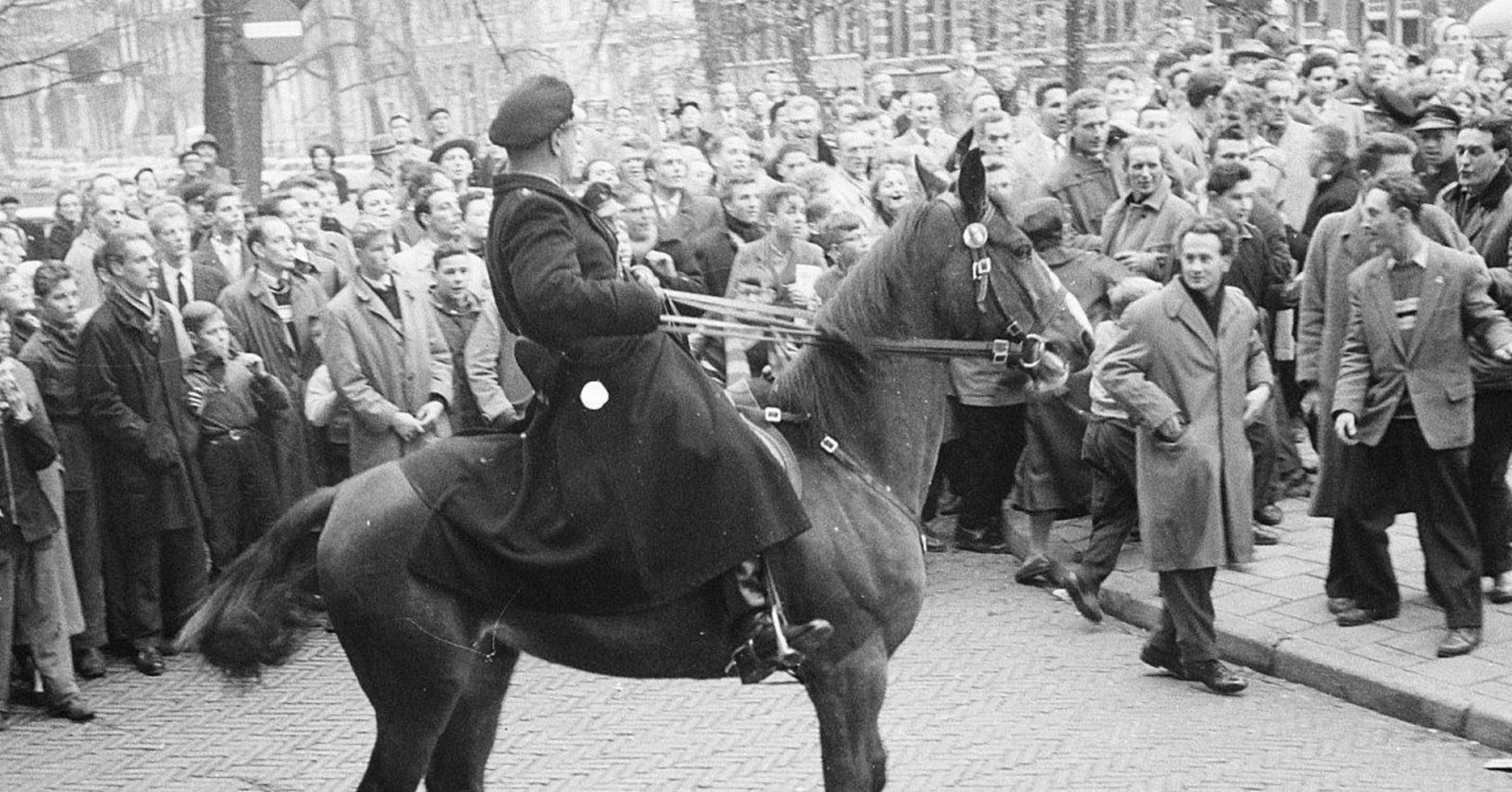
The siege of Felix Meritis: the day Amsterdammers turned on each other over a war 1,500 kilometres away
Redactie Amsterdammers.love · 17 min read
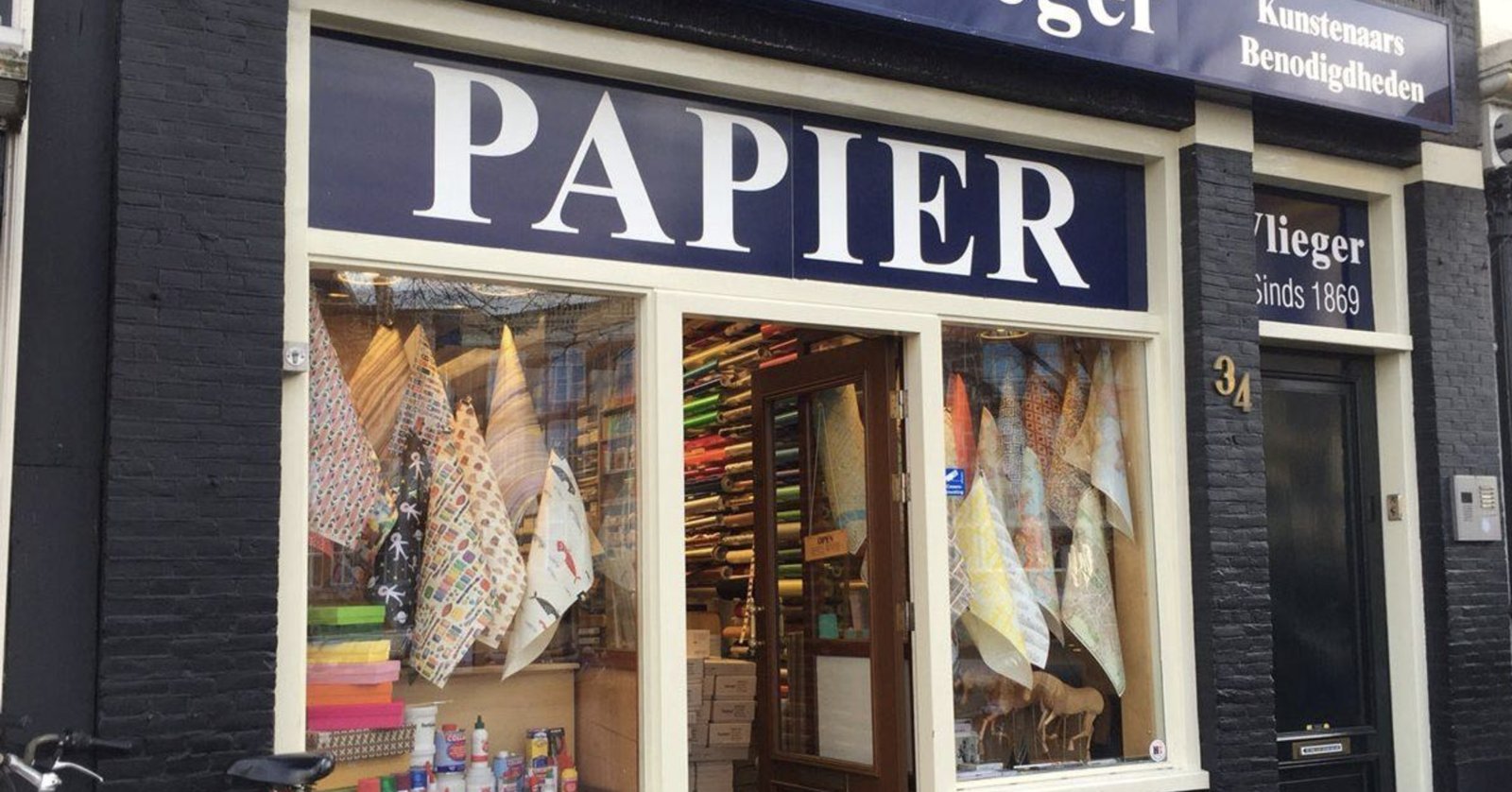
Vlieger: the Amsterdam paper shop that has refused to be ordinary for 157 years
Redactie Amsterdammers.love · 15 min read
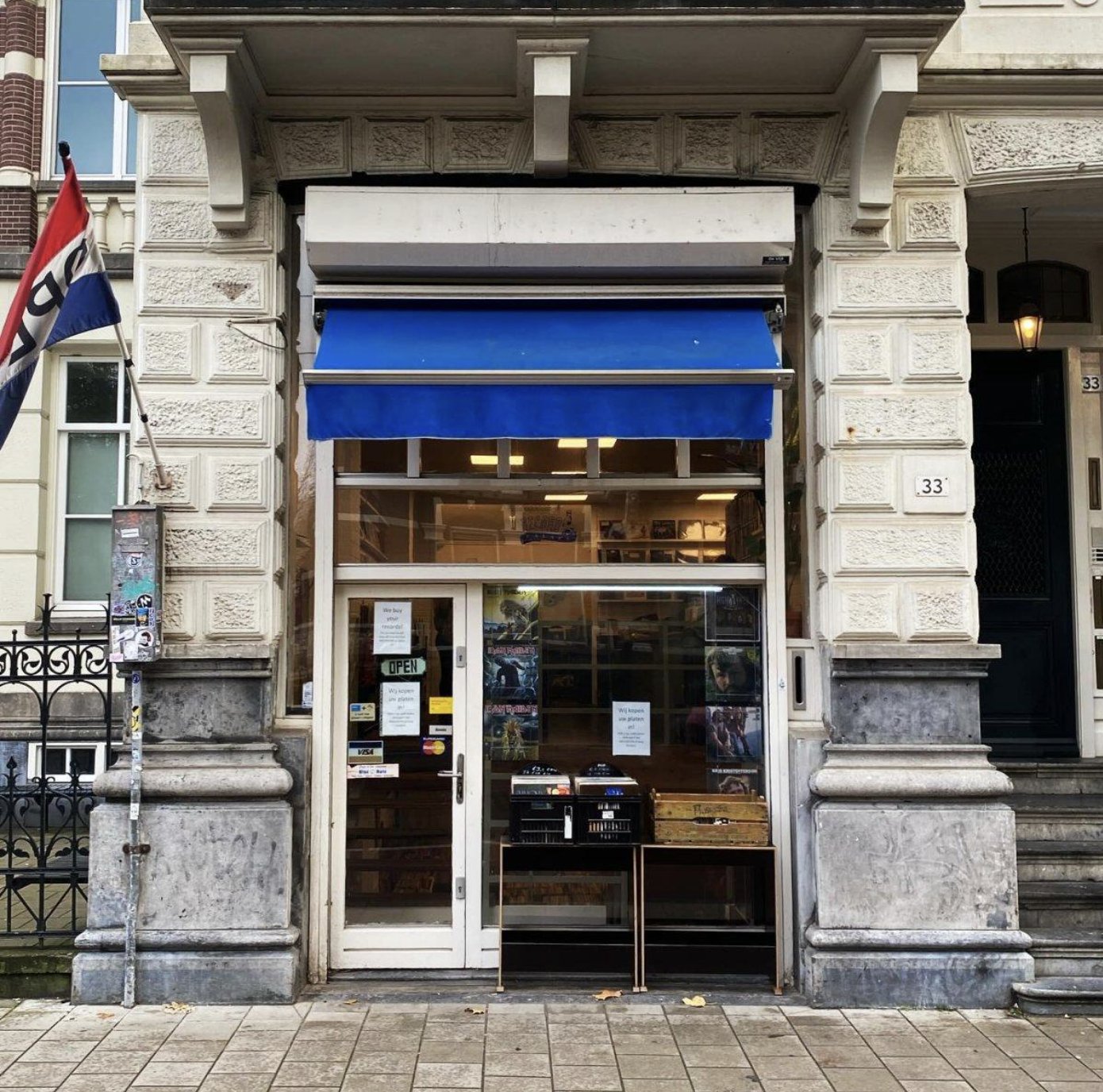
Record Palace: the Amsterdam record shop where world stars simply browse the crates
Redactie Amsterdammers.love · 16 min read