Amsterdammer · week 38
Bet van Beeren (1902–1967): the queen of the Zeedijk who made her own rules
She rode a motorbike through Amsterdam, openly courted women, cut off her customers' ties and let men dance with men when that was accepted almost nowhere. In her small café on the Zeedijk, sailors, sex workers, artists, criminals and gay people sat side by side at the bar. Bet van Beeren cared little about what the outside world thought of her. She lived as she wanted, at a time when that was anything but a given for women like her. Her café became a symbol of the freedom for which Amsterdam would later become world-famous.
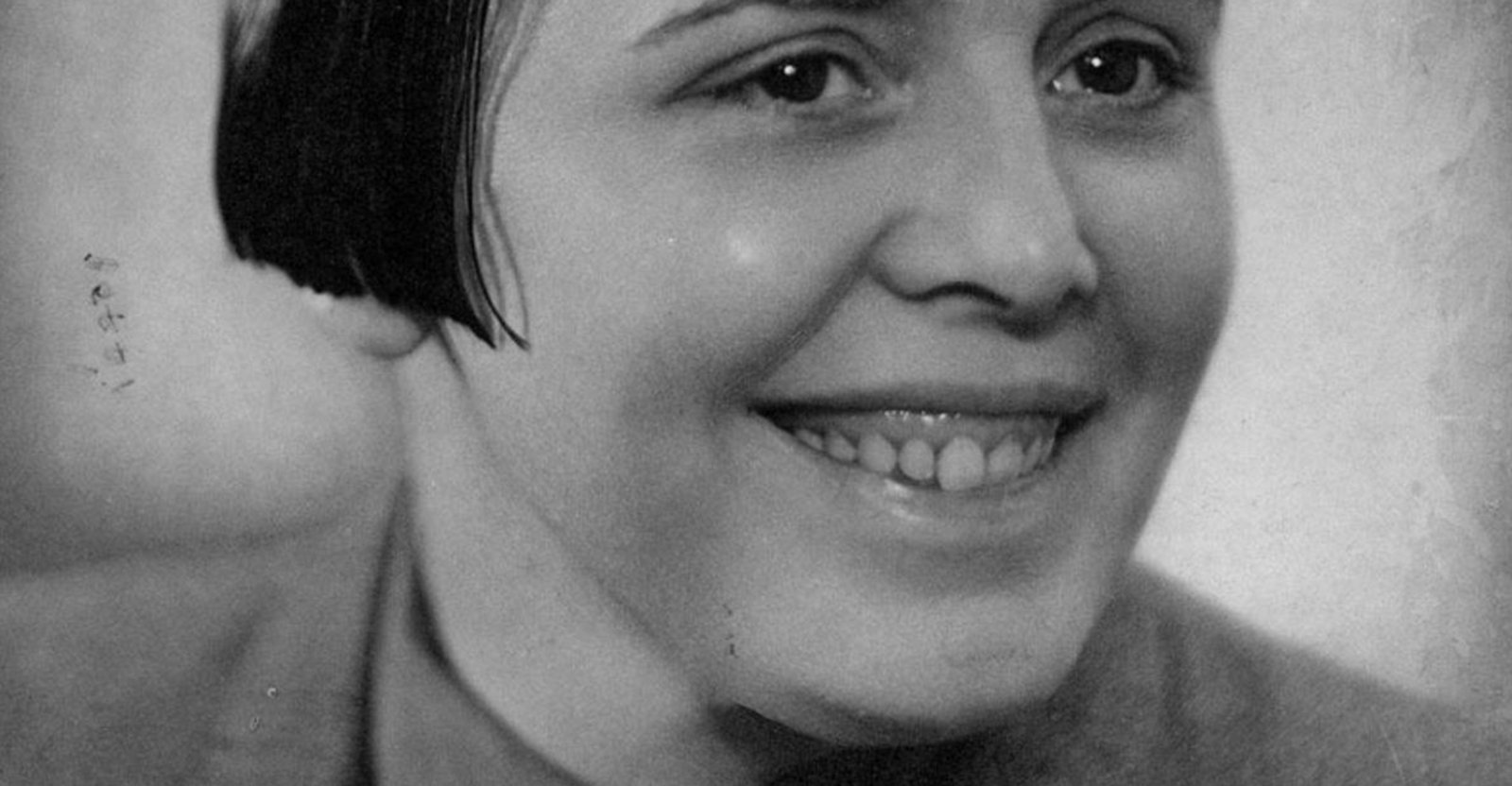
The woman on the motorbike
Amsterdam, some time in the 1930s. A hefty motorbike rumbles through the streets. At the handlebars sits a woman in a leather jacket, with short hair and an air of self-assurance. Sometimes another woman rides pillion. The rider's name is Bet van Beeren. At a time when women were expected to marry, have children and abide by all manner of social rules, Bet chose a different life.
She had her own café, earned her own money and was open about the fact that she loved women. That was exceptional. Homosexuality was still heavily shrouded in taboo in those days. Gay men and lesbian women could by no means show their feelings openly everywhere. Anyone who strayed from the prevailing norms risked rejection and social exclusion.
But Bet seemed to feel little need to conform to those expectations. She was loud, headstrong and, according to people who knew her, not easy to contradict. She loved women, good company, music and a decent glass of beer. And she was determined to arrange her life her own way.
A girl from a poor family in the Jordaan
Elisabeth Maria van Beeren was born in Amsterdam on 12 February 1902. She grew up in a large Catholic family in the Jordaan, then a working-class district. According to the family history, there were fourteen children. Her father worked as a paviour. Her mother ran a lodging house in the Boomstraat, known as De Rode Lantaarn (The Red Lantern), and later sold fish from a cart.
The family was far from well off. At the start of the twentieth century the Jordaan was a poor working-class neighbourhood. Large families often lived in small houses. There was little privacy and children started work young. Bet had to help out too. At her mother's lodging house she learned how to deal with guests. She helped bottle beer and got to know the world of Amsterdam's small pubs and lodging houses.
Later she went along with her mother to sell fish. She was given the nickname Betje Bokkum (bokkum being Amsterdam slang for a smoked herring). But working life had its dangerous side too. Bet spent some time working in a tin factory, where she lost two fingertips in an accident. After a quarrel at the factory she left. She went to work for her uncle Toon Engelen, who had a café on the Zeedijk.
It proved to be a decisive moment. Because it was there that Bet found the world in which she would feel at home.
The Zeedijk of a hundred years ago
In the 1920s the Zeedijk was no ordinary Amsterdam street. For centuries it had been a place where sailors, traders, sex workers and travellers came together. There were cafés, lodging houses and all kinds of establishments that respectable citizens preferred not to talk about too much. Close by, a lively Chinese community was also emerging, with shops, restaurants and residents linked to international shipping.
The area also had jazz clubs where musicians from widely differing backgrounds performed. On the Zeedijk, different worlds met. Rich and poor. Amsterdammers and foreigners. Labourers and artists. People with respectable lives and people who lived outside society's norms. For the young Bet, that was precisely the attraction. Here, not everyone had to be the same.
Here, a woman with a big mouth and a will of her own could find her place.
A café owner at 25
On 24 February 1927 Bet took over her uncle's café. She was just 25. At the time the place was called Café Amstelstroom. Bet gave it a new name: Café ’t Mandje (The Little Basket). According to the family history, the name came from her mother, who brought Bet food at the café every day in a little basket. It was a simple name for a small pub.
No one could have guessed then that almost a hundred years later the name would have a firm place in the history of Amsterdam. Bet stood behind the bar herself. She knew her customers, poured the beer and decided what went on in her establishment. And one thing was clear from the start. At Bet's, everyone was welcome.
A café where no one had to hide
In 1920s Amsterdam there were meeting places for gay men and women. But they were not always easy to get into. Some were expensive. Others worked with closed circles or personal introductions. And most people attracted to their own sex had to be extremely careful. The vice squad kept an eye on cafés. A suspicion of illicit sexual contact could have serious consequences for an establishment's licence.
For many gay Amsterdammers, this meant keeping their feelings hidden. Bet did not. She was openly lesbian herself and made her café a place where people could meet without constantly having to pretend to be someone else. But what was remarkable was that ’t Mandje never became an exclusively gay café. At the bar sat local residents, sailors, artists, sex workers, intellectuals and curious visitors from outside Amsterdam too.
One came for the company. Another for the music or the beer. And someone else because it was one of the few places where he or she felt at ease. Bet made few distinctions. It was her café. And she decided who belonged.
One important rule: no kissing
Even so, Bet was certainly not a woman who let anything go. In her café there was a strict ban on kissing and other intimate behaviour. That seems contradictory. A woman who openly loved women herself, yet forbade her gay customers to kiss one another. But there was a practical reason behind it. The authorities could close a café if, in their view, illicit sexual behaviour was taking place.
Bet did not want to lose her drinks licence. That was why public displays of intimacy were forbidden. According to historical accounts, incidentally, the rule applied to heterosexual couples too. So Bet could be very tolerant and strict at the same time. She offered people a place where they were welcome, but expected them to respect her house rules. The freedom in ’t Mandje was therefore not unlimited.
It was a constant balancing act between what Bet herself wanted and what the authorities would allow.
The porcelain owl behind the bar
One of the most remarkable objects in the history of ’t Mandje is a porcelain owl. The figurine stood behind the bar. In the 1950s, so the story goes, Bet used it as a warning system. When someone came in whom she did not trust, she could switch on a little light inside the owl. That happened, for example, when she suspected a visitor might cause trouble over the gay customers or might be from the vice squad.
The regulars understood the warning. They had to be careful. It was a simple system, but it says a lot about the times in which the café operated. At Bet's, customers could be themselves. But they were not entirely safe from the outside world. The porcelain owl has been preserved and is now part of the historical collection of the Amsterdam Museum.
A small object that recalls a period when people had to reckon with police checks and social rejection even in their favourite café.
The ties on the ceiling
Anyone who has ever been to Café ’t Mandje probably remembers its extraordinary interior. The café is crammed with photos, flags, souvenirs, notes and other objects. But it is above all the snipped-off ties that stand out. There is a famous story behind them. Bet had a habit of sometimes cutting off male customers' ties. According to one well-known explanation, she did so because she disliked men who thought themselves more important than others.
In her café, a smart tie was not to be a sign of superiority. But her sister Greet later told a different version. According to Greet, Bet mainly wanted to keep a memento of convivial evenings. When she had enjoyed herself with customers, she would sometimes ask them to leave something behind. It might be a business card. A photo.
A note. A shoe. Or a tie. And so the interior slowly grew into a collection of memories. All sorts of bizarre objects ended up hanging among them, such as a set of false teeth and stuffed animals. The café became almost a museum of its own visitors. Every object had a story. And Bet only had to look at it to remember the people and the events.
On Koninginnedag, everyone could dance
One of Bet's great loves was the Dutch royal family. She was an ardent royalist. Portraits of members of the royal family hung in the café, and Koninginnedag (Queen's Day, the national holiday marking the monarch's birthday) was celebrated in style. But Bet put her own twist on it. Normally people were not allowed simply to dance in cafés without a special licence. On certain public holidays, exceptions applied.
And Bet made the most of that. On Koninginnedag the billiard table was taken apart to make room. The music went on. And there was dancing. Not only men with women. But also men with men and women with women. In 1930s Amsterdam that was remarkable. In many other places such behaviour would have led to trouble.
But in ’t Mandje it simply happened. The actor Albert Mol later recalled how exceptional those parties were. People could dance with whoever they wanted to dance with, without the other customers batting an eyelid. The parties became legendary. And they added to Bet's reputation as the woman at whose place Amsterdam was sometimes just a little freer than outside.
The war years: danger behind the café door
When Germany invaded the Netherlands in May 1940, life on the Zeedijk changed too. The occupation brought new rules, bans and dangers. The German authorities regarded parts of Amsterdam's nightlife district as undesirable territory for their soldiers. But not everyone obeyed those regulations. German soldiers sometimes visited the cafés on the Zeedijk as well.
That made life complicated for Bet. Several remarkable stories circulate about her activities during the war. She is said to have sheltered Jewish people in hiding. She is also said to have concealed weapons in the building for her brother, who was in the resistance. According to a well-known anecdote, German soldiers once came dangerously close to discovering hidden weapons, but Bet managed to steer them back outside with her big mouth and quick thinking.
These events are described in historical publications, but not all the details can be independently verified. Some stories have survived through oral tradition. What is clear is that during the war years Bet continued to use her café as a meeting place for people from widely varying backgrounds. She also remained an outspoken admirer of the Dutch royal family. Portraits of the House of Orange remained important to her.
At a time when such loyalty to the Dutch royal family was a sensitive matter, that was not without significance.
The woman behind the big mouth
Anyone who knows only the stories about her motorbike, her drinking and the ties might think Bet was mainly a loud-mouthed landlady. But people who knew her also described another side. Bet was generous. She gave money to people and organisations in need. Although she no longer took an active part in Catholic church life, she continued to support the church financially.
The Salvation Army could count on her too. That brought her into contact with another remarkable Amsterdam woman. Majoor Bosshardt. The well-known Salvation Army officer who for years devoted herself to people in vulnerable circumstances in and around the Wallen, the red-light district. When Bet later fell ill, Majoor Bosshardt played an important part in supporting her. It is a remarkable connection.
An openly lesbian landlady with a rough-and-ready bar. And a Salvation Army woman who dedicated her life to helping others. They came from completely different worlds. But they found each other in their commitment to people. That was Bet too. She could be tough, drink a lot and pick a proper fight. But she could also be exceptionally caring and generous.
The woman who made her café her life
Bet ran ’t Mandje for forty years. She was not only the owner. She was also the face, the voice and the character of the place. Her presence set the atmosphere. When she stood behind the bar, everyone knew who was boss. But as she grew older, life increasingly took its toll.
Bet was known as a heavy drinker. She did not exactly live according to the advice a doctor would have given her. Her younger sister Greet gradually took over more of the work. Greet stood behind the bar, saw to practical matters and kept the household running. That was not always easy. According to the family history, Bet could be a difficult employer.
She had a strong personality and did not like being told what to do. Still, Greet stayed with her. In their own way, the two sisters were inseparably bound up with the café. Bet was the legend. Greet made sure the place kept going.
A farewell on her own billiard table
Bet van Beeren died on 16 July 1967. She was 65. Her death marked the end of an era on the Zeedijk. But her farewell was entirely in keeping with the way she had lived. According to the family history, after her death Bet lay in state for two days on the billiard table in her own café. The billiard table around which so many customers had stood.
Where room was made for dancing couples on Koninginnedag. And where countless conversations had taken place. Now the woman who had been at the centre of that world for forty years lay on the table herself. Friends and acquaintances could say goodbye in the place so closely bound up with her. So even after her death, Bet stayed in her own café a little longer.
Greet keeps the memory alive
After Bet's death her younger sister Greet took over the business. At first she dreaded it. Bet had been an imposing personality. It was hard to follow in her footsteps. But Greet kept the café open. She built her own bond with the customers and became a much-loved face on the Zeedijk herself.
Like Bet, she loved music, stories and a convivial evening. She could sing old Amsterdam songs and had her own brand of humour. But the Zeedijk was changing. In the 1970s and 1980s the neighbourhood was increasingly plagued by drug dealing, addiction and nuisance. The mood on the street grew grimmer. It became harder to carry on the café in the same way.
In 1982 Greet decided to close the doors. After 55 years, daily café life at ’t Mandje came to an end. But Greet did something remarkable. She left the interior intact. The ties stayed up. The photos stayed on the walls. The souvenirs stayed where they were. She herself lived above the café and made sure everything was looked after.
She cleaned, aired the place and kept her sister's memory alive. The café stood empty for years, but it still looked as though the customers might return at any moment.
Closed for twenty-six years, but never forgotten
From 1982 to 2008 ’t Mandje remained largely closed. Yet the café never vanished from Amsterdam's memory. The stories lived on. People remembered the parties, the remarkable customers and the woman who used to stand behind the bar. During the 1998 Gay Games, when Amsterdam welcomed tens of thousands of international visitors, the café even opened for a week.
It was a tribute to Bet. And a special link between the history of Amsterdam's gay culture and the major international celebration of diversity the city hosted that year. The Amsterdam Museum also took an interest in the historic interior. A replica of the café was made, in which original objects found a place. In this way ’t Mandje became more than just a former pub.
It became cultural heritage. A tangible reminder of a time when there were only a handful of places where people could openly be themselves.
The niece who brought the café back
In 2007 Greet sold the café to her niece Diana van Laar. Shortly afterwards Greet died. Diana decided that the story of Bet and Greet must not disappear. She wanted to reopen the café. But not as a modern bar in which all the old memories were replaced. Its historic character had to be preserved. The photos, ties, furniture and souvenirs were not ordinary decoration.
They told the story of generations of visitors. After a thorough refurbishment, Café ’t Mandje reopened on 29 April 2008. Just in time for another Orange celebration. The kind Bet used to love organising. After 26 years, there was life once again in the little café on the Zeedijk.
History gets a new future
In the years that followed, the story of ’t Mandje took another remarkable turn. In December 2020 NV Zeedijk bought the building from the family. It was agreed that the café's historic character had to be preserved. To make that possible, Stichting ’t Mandje 1927 (the ’t Mandje 1927 Foundation) was set up. Its aim was to protect the café's tangible and intangible heritage.
It was not only about preserving objects. But also about keeping alive the ideas Bet stood for. Equality. Respect. And a place where people are welcome, whatever their background or sexual orientation. In 2024 and 2025 a major renovation followed. The historic building was technically upgraded and made more sustainable. The roof and façades were insulated.
Window frames were renewed. The interior was carefully removed for the time being and then put back. On the first floor came a space intended to bring the life of Bet van Beeren to light. And on the upper floors three rooms were created where visitors can stay the night. The café reopened in June 2025. Almost a hundred years after Bet welcomed her first customers, a new chapter began in the history of ’t Mandje.
Bet's legacy is still very much alive
February 2027 marks a hundred years since Bet van Beeren, aged 25, took over her uncle's café. Café ’t Mandje's centenary is on the horizon. The café still stands at the same address: Zeedijk 63. It is simply open to visitors. You can still order a drink there.
Look at the photos and objects. And reflect on the people who came together here over the past century. But the café is now more than a place to drink. It features in the Canon van Amsterdam (the city's canon of key moments in its history). The Amsterdam Museum keeps objects and stories about Bet. And in the project Vrouwen van Amsterdam — een ode (Women of Amsterdam — an ode) she is once again recognised as a woman who helped shape the character of the city.
That is a remarkable development. Because when Bet started her café in 1927, she was simply a young Amsterdam businesswoman who wanted to live her own life. She can hardly have foreseen that almost a hundred years later historians, museums and visitors from all over the world would know her name.
The woman who made Amsterdam a little freer
Bet van Beeren was no politician. She wrote no manifestos on emancipation. She founded no large social organisation. And she probably did not give many speeches about equal rights. She did something else. She opened a café. And she let in people who were not always welcome elsewhere. That may seem simple. But in the Amsterdam of the 1920s, 1930s and 1940s it was exceptional.
She offered a place to gay men and lesbian women from different social classes. She let people mix who outside her café might never have sat side by side. And she herself refused to pretend that her love for women was something to be ashamed of. That did not make her a saint. Bet could be difficult, drink heavily, pick fights and care little about other people's feelings.
But it is precisely those contradictions that make her a human being of flesh and blood. Not a tidy example from a history book. But a headstrong Amsterdam woman who lived her life the way she wanted.
The queen of the Zeedijk
She did not get the nickname for nothing. Bet was the queen of the Zeedijk. Not because she was rich or powerful. But because she had created a small world where her own rules applied. A world of beer, music, snipped-off ties and a porcelain owl. Where men danced with men. Where women danced with women.
Where a sailor sat next to an artist. And where a woman in a leather jacket was the boss. Today Amsterdam is known internationally as a city of freedom, tolerance and diversity. That reputation did not come about by itself. It was shaped in part by people who, often long before society changed, made room for others.
Bet van Beeren was one of them. And perhaps that is the loveliest thought when you walk into Café ’t Mandje today. That you are not just drinking a beer in an old Amsterdam pub. But standing in a place where, almost a century ago, people were already rehearsing a freer Amsterdam. Bet van Beeren did not change the world with grand words. She did it by opening her café door.
And that makes her a remarkable Amsterdammer.
Sources
IHLIA LGBTI Heritage (Bet van Beeren), Stadsarchief Amsterdam (Koningin van de Zeedijk [Queen of the Zeedijk]), Café ’t Mandje (history and Stichting ’t Mandje 1927), De Lage Landen (Tijmen van Voorthuizen, Bet van Beeren, de kroegbazin die een vrijplaats creëerde [Bet van Beeren, the landlady who created a safe haven], November 2024), the Amsterdam Museum (Vrouwen van Amsterdam [Women of Amsterdam]) and NV Zeedijk on the renovation of Zeedijk 63 (June 2025). Some of the more colourful anecdotes about Bet have been passed down by family members and former customers; where historical certainty is limited, the text says so.
Comments (0)
Log in to leave a comment.
More stories about Amsterdam
All stories →
The siege of Felix Meritis: the day Amsterdammers turned on each other over a war 1,500 kilometres away
Redactie Amsterdammers.love · 17 min read
Vlieger: the Amsterdam paper shop that has refused to be ordinary for 157 years
Redactie Amsterdammers.love · 15 min read
Record Palace: the Amsterdam record shop where world stars simply browse the crates
Redactie Amsterdammers.love · 16 min read