Amsterdammer · week 46
Henriëtte Pimentel (1876-1943): the creche director who made hundreds of children disappear
At the Plantage Middenlaan she ran an ordinary creche, until in 1942 it became the hiding place for children who had to be saved from deportation
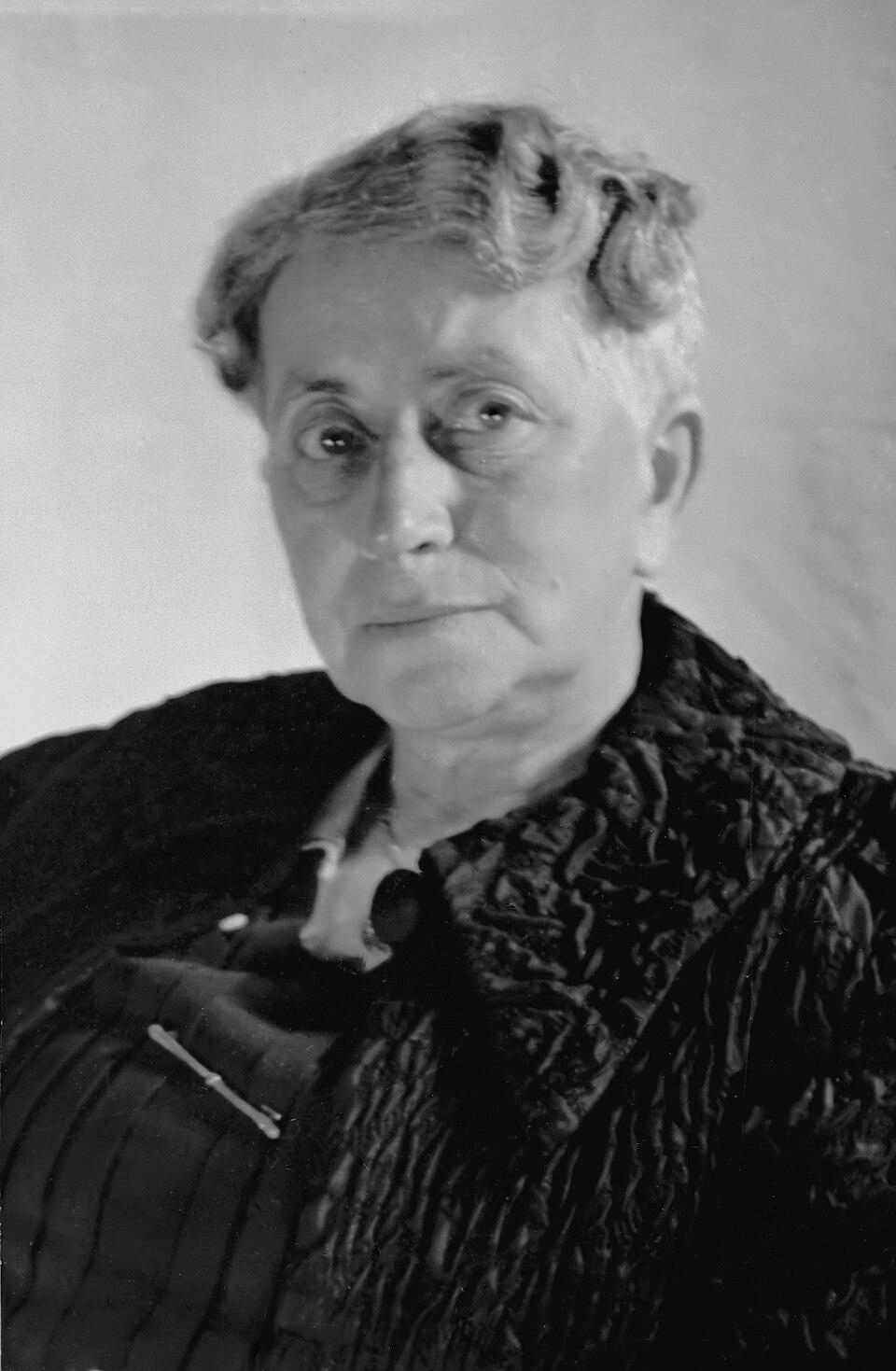
The nursery across from the theatre
Amsterdam, summer 1943. On the Plantage Middenlaan, in the heart of the Plantage neighbourhood, stands an ordinary-looking building at number 31. By day, children's voices can be heard inside. There are cots, playpens, porridge on the stove, just like in any other nursery in the city. But this is no ordinary creche. Across the street stands the Hollandsche Schouwburg, a former theatre the German occupier has turned into an assembly point for Amsterdam's Jews awaiting deportation. Parents wait there, often for days, for transport to Camp Westerbork. When the theatre becomes too crowded, their children are brought across the street. To the creche.
The woman in charge there is Henriëtte Pimentel. She is 67 years old, small in stature, with greying hair and glasses. Nothing about her suggests a resistance fighter. Yet in the months that follow, together with a handful of others, she will make hundreds of children disappear from the occupier's records. Not with weapons. With a pram, a shopping bag, and a list that was quietly altered.
A diamond cutter's daughter
Henriëtte Henriquez Pimentel was born in Amsterdam on 17 April 1876. Her family belonged to the city's old Portuguese-Jewish community, long established in Amsterdam. Her father, Nathan Henriquez Pimentel (1837-1893), worked as a diamond cutter or dealer, a trade in which many Amsterdam Jews were employed at the time. Her mother was Rachel Oppenheimer (1841-1929).
Sources differ on exactly how many children the family had. Some accounts mention seven siblings; a biography of Henriëtte states she was the tenth of thirteen children. What is certain is that she grew up in a large family, in a city where the Portuguese-Jewish and Ashkenazi communities each had their own place, with their own synagogues, schools and social institutions around the Plantage and the old Jewish quarter.
From kindergarten teacher to creche director
Henriëtte chose a profession that was still relatively new in her time: she trained as a Froebel-method teacher, a pedagogical approach for young children, and also trained as a nurse. In the early twentieth century, some sources say as early as 1902, she started her own Froebel school in Amsterdam. That school later moved to Sarphatistraat 115.
Between 1917 and 1922 she worked as a governess in Bussum. During those years she was also socially active: she campaigned for women's suffrage and helped found a local branch of a women's organisation. It was a period in which women in the Netherlands first gained the right to vote, and Henriëtte was among the women who actively fought for it. Exactly which role she held between those years and her appointment in Amsterdam is not consistently recorded across sources.
The creche on the Plantage Middenlaan
In 1926, Henriëtte Pimentel became director of the Vereeniging Zuigelingen-Inrichting en Kindertehuis, an institution at Plantage Middenlaan 31 partly funded by a Jewish bequest. The creche could care for around a hundred infants and toddlers and employed mostly Jewish staff. She herself lived nearby, at Plantage Middenlaan 25.
In the years before the war, the institution was not a closed Jewish world. It cared for both Jewish and non-Jewish children, and trained young women as childcare workers. Year after year, Henriëtte built a reputation as a capable and strict director who kept a close eye on the children in her care.
The occupation changes everything
When Germany invaded the Netherlands in May 1940, life changed for every Jewish Amsterdammer, and with it, the creche. The occupier introduced measure after measure to remove Jews from public life. In 1941, Henriëtte was forced to dismiss her non-Jewish staff. The creche, once open to everyone, increasingly became an institution within a sealed-off world.
From 1941, Amsterdam's Jews were forced to move into designated neighbourhoods, including the Plantage area. The streets around the creche filled with families who had been made to leave their homes elsewhere. What no one could know yet was that within a year, this neighbourhood would become the setting for one of the darkest chapters in Amsterdam's history.
A theatre becomes a waiting room for death
In the summer of 1942, the occupier began the large-scale deportation of Jews from Amsterdam. The Hollandsche Schouwburg, a theatre that since 1941 had been open only to Jewish audiences, was converted into an assembly building. Families who had been arrested or ordered to report were held there temporarily before being transported to Westerbork, and from there onward to the camps in central and eastern Europe.
The theatre quickly became overcrowded. Hundreds of people waited there, sometimes for days, in appalling conditions. There was no room for the children. So the German authorities decided that young children would be moved to the creche across the street, to Henriëtte Pimentel's building. What began as a practical solution to a capacity problem became the setting for one of the largest rescue operations of the Dutch war years.
Walter Süskind and the Jewish Council's paperwork
Working in the administration of the Hollandsche Schouwburg was Walter Süskind, a German-Jewish refugee who kept the registration of prisoners for the Jewish Council. Like Henriëtte, Süskind quickly realised that the occupier's chaotic, hurried bookkeeping left room for deception. The names of children who had been moved to the creche could sometimes disappear from transport lists unnoticed, especially when the German guards themselves failed to track the exact numbers.
From that point on, Süskind worked closely with Henriëtte Pimentel. She had the children in her building; he had access to the paperwork that determined their fate. That combination of trust and risk formed the basis of what would later be described as one of the largest secret rescue operations within the persecution of Amsterdam's Jews.
Johan van Hulst and the teacher training college next door
Next to the creche, its garden bordering directly onto Henriëtte's, stood the Reformed Teacher Training College, led by Johan van Hulst. Van Hulst, not Jewish himself, saw from his window what happened daily: children being brought in, and children being taken away to the trains. He decided to open his building to the operation Henriëtte and Süskind had already begun.
Through the garden and the college, children could leave the creche without being seen from the street or from the theatre. Together with students and resistance members, Van Hulst coordinated what came next: hiding addresses, sometimes hundreds of kilometres away in Friesland or Limburg, for children who would most likely never see their parents again.
How a child disappeared
The method was as simple as it was dangerous. Older children were sometimes simply walked out by hand, past a tram stop, just like any other child in the neighbourhood. Toddlers and infants were hidden in shopping bags, baskets or laundry. Sometimes someone from outside the creche would leave an empty pram standing by the door, and walk away a little later with a child inside it.
The operation reportedly carried the code name N.V., short for naamloze vennootschap (limited company), an ironic nod to the anonymity the plan required. Those involved spoke of it to no one who did not strictly need to know, not even their own families. A single misspoken word could put the entire network, and hundreds of lives, at risk.
Hundreds of children, an uncertain number
Exactly how many children Henriëtte Pimentel, Walter Süskind and Johan van Hulst saved cannot be established with certainty to this day. Different authoritative sources give varying estimates: some speak of roughly 500 to 800 children, others cite 600, and still others give a range stretching from 400 to over 1,000. The chaos of the war, the absence of any central record of the operation itself, and the need at the time to put as little as possible on paper, make an exact figure impossible.
What is certain is that this was one of the largest known rescue operations for Jewish children in the occupied Netherlands, and that most of the other children registered at the Hollandsche Schouwburg were in fact deported and murdered. The creche's rescue work was an exception within an overwhelming majority of tragedies.
She chose to stay
According to several accounts, Henriëtte Pimentel herself was offered a hiding address. She could have disappeared, as she had arranged for hundreds of children. She refused. She stayed at the creche, with the children still in her care, even as it became increasingly clear that her own position grew more dangerous by the day.
Later biographers describe this decision as characteristic of who she was: a woman who placed her responsibility for the children above her own safety, to the end.
Arrested
Sources do not fully agree on the exact date of her arrest. Some accounts place a first arrest in late April 1943. A timeline compiled by Dutch war documentation researchers cites early July 1943. Other, extensively documented accounts describe the creche being definitively cleared on 23 July 1943, when Henriëtte was taken to Camp Westerbork together with 70 children and 36 caregivers.
It was likely a sequence of events: earlier suspicions and brief detentions, followed by the definitive and fatal clearing of the creche in the summer of 1943. The exact order cannot be reconstructed with full certainty, given the incomplete and sometimes contradictory documentation that survives from the war years.
Westerbork
At Camp Westerbork, the transit camp in Drenthe from which most Dutch Jews were deported to the extermination camps, Henriëtte spent the final weeks of her free life. She was 67 years old. Among the thousands who passed through the camp, she was one of many who knew what awaited at the end of the journey, yet had no choice left.
On 14 September 1943, she was put on a transport to Auschwitz-Birkenau, the extermination camp in occupied Poland.
Auschwitz, 17 September 1943
Henriëtte Henriquez Pimentel was murdered in Auschwitz on 17 September 1943, three days after her arrival. She was 67 years old. Like hundreds of thousands of other Dutch Jews, she received no grave. Her name is recorded in the registers of the Netherlands Red Cross and in the memorial archives compiled after the war from surviving documents of the Jewish Council, Westerbork and the camps.
The creche on the Plantage Middenlaan was permanently closed a few weeks later, at the end of September 1943. The building where so many children's lives had been saved, and where Henriëtte herself spent the final months of her life, ceased to exist as what it once was.
A city that stayed silent for a long time
After the war, it took decades before the role of women like Henriëtte Pimentel became widely known. In the first decades after 1945, the Dutch story of the resistance was told mostly through men: armed fighters, underground newspapers, acts of sabotage. The quiet, high-risk work of women who hid children, falsified records or arranged hiding addresses received far less attention.
Biographers who later studied her life, including Esther Shaya and Frank Hemminga, point out that for decades Henriëtte Pimentel was mentioned mainly as a side figure in the story of Walter Süskind and Johan van Hulst, even though she herself was the director of the building where it all began, and the one who had daily care of the children.
A bridge takes her name
In 2016, the city of Amsterdam acknowledged that too few streets, squares and bridges in the city were named after women of the resistance. That year, a bicycle bridge in Amsterdam Nieuw-West was named the Henriëtte Pimentelbrug. Years later, at the initiative of her biographers, a proposal was made to move that name to a far more prominent bridge: number 265, connecting the Tropenmuseum to the Plantage neighbourhood, close to where the creche once stood.
The move was approved by the Oost and Nieuw-West city districts in 2021. With that, Henriëtte's name came to stand alongside other bridges in the Plantage neighbourhood named after Walter Süskind, Felix Halverstad, Piet Meerburg and Johan van Hulst: men she had worked with, who already had a bridge bearing their name, while hers had until then remained largely at the edge of a cycle bridge in a different part of the city.
A Stolperstein across from the Schouwburg
On 8 March 2024, a Stolperstein for Henriëtte Pimentel was laid on the Plantage Middenlaan, across from the Hollandsche Schouwburg, on the spot where the creche once stood. Among those present at the ceremony were Holocaust survivor Lies Caransa-de Hond and a nephew of Henriëtte. One of those present, Esther Barentse-Boas, recounted how she herself was taken out of the creche as a child: a woman with an empty pram walked in, and a little later walked out again, with her inside it.
The stone, a small brass plaque set into the pavement, is one of thousands of Stolpersteine laid across Europe at the last known home or work addresses of victims of Nazi persecution. For Henriëtte Pimentel, that stone lies on the spot where she did her life's work, and from where she was taken away, never to return.
Recognition after eighty years
In July 2021, 78 years after her death in Auschwitz, Henriëtte Pimentel was posthumously awarded the Jewish Rescuers Citation, an honour for Jews who helped other Jews during the Second World War. The award ceremony took place at the Dutch Resistance Museum in Amsterdam, organised by the international Jewish organisation B'nai B'rith. Relatives of Henriëtte and some people who were rescued as children through the creche attended the ceremony.
Biographer Esther Shaya noted on that occasion that women in resistance history have often remained in the background, even when their contribution was decisive. The citation gave Henriëtte, for the first time in an official setting, the leading role that had already been hers.
A garden and a tribute
In 2024, the National Holocaust Museum opened in Amsterdam. The museum's inner garden was named the Henriëtte Pimenteltuin, a place of stillness within a building that tells the history of the persecution of Jews in the Netherlands. Around the same time, as part of Amsterdam's 750th anniversary, Carin te Hoonte wrote a personal tribute to Henriëtte, published through the Geheugen van Oost project.
Te Hoonte calls her determined, courageous and progressive, especially in education, and closes her letter with words that now also appear in the memorial text at the Henriëtte Pimentelbrug: as long as Henriëtte and her children remain in our memory, she is not forgotten.
The woman who stayed
At the spot where the Henriëtte Pimentelbrug connects the Plantage neighbourhood to the Tropenmuseum, a memorial plaque has stood since 2022, bearing a quote from the medieval Jewish scholar Maimonides: he who saves one person, saves an entire world. Applied to Henriëtte Pimentel, the line does not feel exaggerated. Hundreds of children who were taken from her creche on the Plantage Middenlaan, out of the occupier's sight, grew up, had children and grandchildren of their own, and in turn told the story of the woman who had helped them disappear.
Henriëtte Pimentel was not a resistance hero with a weapon. She was a 67-year-old creche director who, when the children in her care were in danger, decided not to look away. She chose to stay, to plan, and, together with others, to build a system that let hundreds of lives escape deportation. She herself did not survive. But the children who did carried her name for decades, long before Amsterdam itself attached that name to a bridge, a garden and a stone in the pavement.
Sources
English Wikipedia (Henriëtte Pimentel), Joods Monument / Digitaal Joods Monument (Henriette Pimentel, creche Plantage Middenlaan), Anne Frank House (timeline: Jewish children rescued from the Hollandsche Schouwburg), NOS (Verzetsheld Henriëtte Pimentel krijgt na 78 jaar postuum onderscheiding, July 2021), AT5 (bridge renaming in the Plantage neighbourhood, December 2021), NH Nieuws (Stolperstein for Henriëtte Pimentel, March 2024), Oorlogsbronnen.nl (timeline Henriëtte Pimentel), Geheugen van Oost / City of Amsterdam (Henriëtte Henriquez Pimentel - een Ode, 2024), and the Historical Marker Database (marker at the Henriëtte Pimentelbrug, 2022). Sources differ on the exact size of the Pimentel family, the precise date of her arrest, and the exact number of children rescued; where this is the case, it is noted in the text.
Nieuwsbrief
Krijg een unieke kijk van en over Amsterdam in je mailbox
De laatste verhalen, en af en toe een verrassing uit het archief.
Comments (0)
Log in to leave a comment.
More stories about Amsterdam
All stories →
De Burcht: the castle diamond workers built for themselves
Redactie Amsterdammers.love · 10 min read
The February Strike of 1941: the day all of Amsterdam went on strike against the persecution of Jews
Redactie Amsterdammers.love · 12 min read
Jacob Hooy & Co: the Amsterdam drugstore that has kept the same address for three centuries
Redactie Amsterdammers.love · 12 min read
The 1928 Olympic Games: how Amsterdam invented the eternal flame
Redactie Amsterdammers.love · 11 min read
Otter with pup filmed in Diemerpark: the first otter birth in Amsterdam since 1963
Redactie Amsterdammers.love · 6 min read

Hans van Onna: the Amsterdammer who was still teaching exercise classes to other older people at 96
Redactie Amsterdammers.love · 13 min read