Amsterdammer · week 47
Samuel Sarphati (1813–1866): the doctor who wanted to rebuild Amsterdam
He started out as a physician for Amsterdam's poor Portuguese Jews and ended up behind a bread factory, a waste company, two banks, a hotel and a glass palace. Samuel Sarphati looked at a city full of disease, stench and poverty and decided to improve it himself. He was praised and obstructed, celebrated and forgotten, and died exhausted and in debt at fifty-three. Only after his death did Amsterdam fully grasp what it owed him.
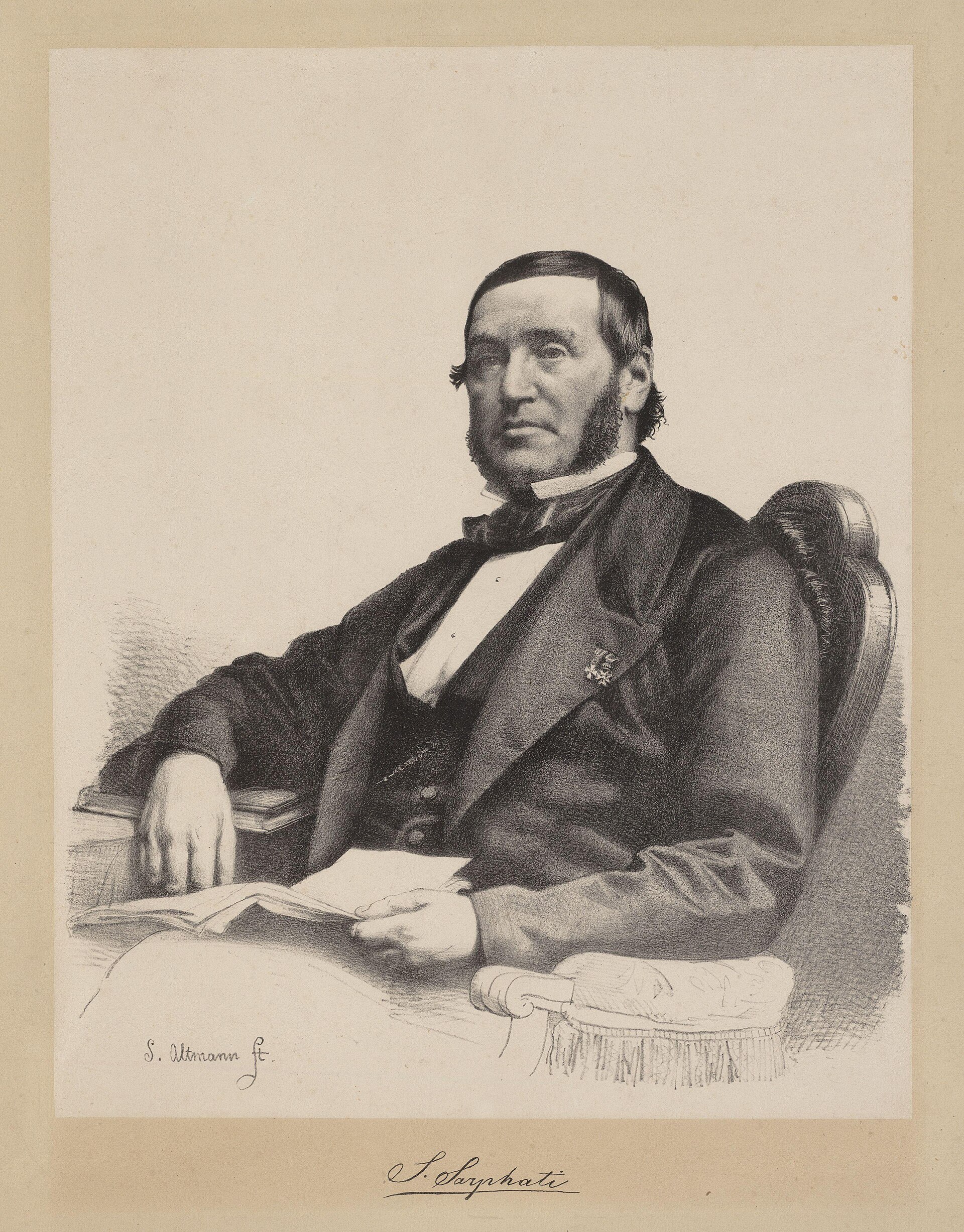
A boy from the Jewish quarter
On 31 January 1813, a boy is born in Amsterdam on the Nieuwe Keizersgracht, in the heart of what was then called the Jewish quarter. His name is Samuel Sarphati. His parents, Emanuel Sarphati and Reyna Musafia, belong to the city's Portuguese Jewish community, a community that had lived in Amsterdam for centuries but largely in poverty by the early nineteenth century. His father is a tobacco merchant. The family is not wealthy, but well enough off to send young Samuel to Latin school and later fund his studies.
That was far from a given. Many children from the Jewish quarter were already working at a young age. The area around the Jodenbreestraat and the surrounding canals was densely populated, damp and poor. Illness was a constant visitor. Sarphati grew up amid that poverty, and that childhood would shape the rest of his life. What he saw as a child, he would try to change as an adult.
Doctor to the poor
At twenty, Sarphati begins studying medicine in Leiden. He earns his doctorate in June 1839. Back in Amsterdam, he starts working as a physician, and in February 1840 he is officially appointed doctor to the Portuguese Jewish poor, attached to the Mesjiev Nefesj hospital. It is not lucrative work: 250 guilders a year. But it brings him exactly to the place he already knew from childhood: the poorest corners of his own community.
What Sarphati sees there never leaves him. Families living in rooms too small, too damp and too dark. Streets full of refuse. Canals that look more like open sewers than the backdrop of a world city. Contagious diseases spreading effortlessly in such conditions. For Sarphati this is not an abstract social problem. It is something he sees daily at his patients' bedsides.
He is not a man who stays quiet when he disagrees with something. In 1842 he clashes with the parnassim, the conservative board of the Portuguese-Israelite community, over how the hospital is run. A few years later, in 1846, he resigns as doctor to the poor after the board criticises his dedication. That does not stop him from donating back the salary still owed to him. Sarphati is stubborn, but not self-interested.
Remarkably, he stays active within that same community. From 1854 he sits on the board of the Portuguese-Israelite community, where he becomes treasurer and chairman of both the parnassim and the church council. He reforms the administration, makes the community's first inventory of ceremonial objects, and defends the continued existence of the poor school. From 1851 he is also, as a liberal, a member of the Provincial States of North Holland. Step by step, the doctor also becomes an administrator.
The stench of the city
Mid-nineteenth-century Amsterdam is not a pleasant city to live in, certainly not for the poor. The canals are full of filth and waste. There is no organised refuse collection. Cesspits overflow. Cholera and other contagious diseases return regularly, hitting the poorest neighbourhoods hardest. While other European cities slowly begin building sewers and drinking-water systems, Amsterdam lags behind.
Sarphati draws a conclusion from this that is not self-evident for a physician of his time: disease is not fought only at the sickbed, but above all by changing the conditions in which people live. Clean streets, healthy food, dry housing and decent sanitation are, in his eyes, at least as important as medicine. That idea would shape the rest of his life and turn him from doctor into urban reformer.
A company for the city's waste
In 1847 Sarphati obtains a permit to collect ash, refuse and manure in Amsterdam. He sets up a company, focused on agriculture and land reclamation, which collects the city's household waste, processes it into compost, and sells it to farmers in the surrounding area. It is a clever combination: the city becomes cleaner, and the waste gains new value as fertiliser for the surrounding land.
Thirty years later, in 1877, the municipality takes over this task. From that initiative eventually grows the Amsterdam city sanitation service. More than a century later, garbage trucks still collect waste in a city where Sarphati was among the first to realise that clean streets are not a luxury, but a condition for a healthy population.
Bread the poor could afford
In the nineteenth century, bread is the most important food for ordinary Amsterdammers. But its quality often leaves much to be desired, and various restrictive rules and monopolies keep it relatively expensive. When the old rules governing the bread trade are abolished in 1855, Sarphati sees his chance. He founds the Society for Flour and Bread Factories and builds a bread factory on the Vijzelgracht.
The result, according to tradition, is bread roughly thirty percent cheaper than the average baker's, and of better quality. For families counting every cent, that makes a difference. The factory proves no short-lived experiment: it survives into the twentieth century and is only closed in 1960, more than a century after it was founded.
A city that had to prove itself
In 1851 Sarphati travels to London, to the Great Exhibition, held in the famous Crystal Palace. What he sees there leaves a deep impression. England displays its industrial strength and progress in a gigantic building of glass and iron. Back in Amsterdam, Sarphati sees above all how far his own city has fallen behind. Amsterdam lacks the flair, the industry and the self-confidence of Europe's great capitals.
He decides Amsterdam needs its own palace of progress: a place where Dutch industry and entrepreneurship can present themselves to the public and to each other. The idea becomes known as the Paleis voor Volksvlijt, the Palace for Industry. King William III lays the first stone on 7 September 1852. But the project stalls in municipal hesitation. In 1853 the city council refuses the land Sarphati needs, and it takes years before construction actually gets underway.
Sarphati has grand plans for expanding the city beyond the old canal ring, but the conservative city council finds those plans too ambitious. In the end, a more modest version is built than he had envisioned. It is a pattern that recurs throughout Sarphati's life: big ideas, colliding with a city government that prefers caution.
The Palace for Industry
On 16 August 1864, the Paleis voor Volksvlijt finally opens, on what is now Frederiksplein. It is an imposing building of glass and steel, clearly inspired by the London example. Exhibitions, concerts and events are held there. For Sarphati, the palace is the symbol of everything he has fought for: an Amsterdam that dares to shine again. At the opening he is knighted in the Order of the Netherlands Lion.
But the triumph is bitter. Two months earlier, in May 1864, his wife Abigaël Mendes de Leon had died, at the age of forty. She was the daughter of a wealthy banker, and her capital and network had helped finance Sarphati's plans for years. At the moment his life's work finally opens its doors, he is mourning the woman who had supported him through all of it.
A hotel for the elite and banks for the city
Sarphati does not limit himself to the palace. He brings investors on board for the Amstel Hotel, meant to draw prominent visitors and businessmen to Amsterdam, a city otherwise seen as old-fashioned and provincial. He is also involved in founding institutions such as the Nederlandsche Crediet- en Depositobank, the Nationale Hypotheekbank and a building society, meant to make investment and urban development possible. He also helps establish a professional association for pharmacists, a forerunner of today's Royal Dutch Pharmacists Association.
The picture that emerges is of a man who did not see medicine, urban development, poor relief and entrepreneurship as separate worlds. For Sarphati, they were all part of the same project: an Amsterdam that would become healthier, more prosperous and more modern. Not everyone in the city shared his enthusiasm. He constantly had to negotiate, persuade and sometimes fight a city government that preferred to hit the brakes.
A sudden death
After his wife's death, Sarphati himself does not fare well. The grief weighs heavily, and his health is undermined by a bowel ailment. Meanwhile he keeps working: on the palace, on his factories, on his financial institutions. On 23 June 1866 he dies suddenly, just two days after the first major industrial exhibition opens in the Paleis voor Volksvlijt. He is 53 years old.
He leaves no great wealth behind. According to tradition, he had invested nearly all his money in his own projects, leaving considerable debts. His friend and later successor in public life, A.C. Wertheim, arranges the settlement of his estate. Wertheim would later say, tellingly, that Sarphati died like Moses, with the Promised Land in sight, but without having reached it himself.
On 25 June 1866, Sarphati is buried beside his wife at the Portuguese-Israelite cemetery Beth Haim in Ouderkerk aan de Amstel. Twenty thousand Amsterdammers reportedly accompanied the funeral procession; thirty carriages followed the hearse through the streets and along the canals. His gravestone bears a Hebrew inscription that translates roughly as: and Shmuel died, and all of Israel mourned him.
A park, a street, a name
Today, Amsterdam remembers Sarphati's work in several places. The Sarphatistraat, between Weesperplein and the Amstel, bears his name, as does the Sarphatikade. In De Pijp lies Sarphatipark, laid out between 1881 and 1886 to a design by municipal engineer J.G. van Niftrik, an English-style landscape park in his memory. A monument to him stands in the park, unveiled in 1886.
The Amstel Hotel, which Sarphati helped make possible, still stands on the Amstel and is considered one of the city's most prestigious hotels, even though it does not carry his name. The Paleis voor Volksvlijt had less luck: on 18 April 1929 the building was destroyed in a major fire and was never rebuilt. Of the palace that, for Sarphati, symbolised a new Amsterdam, only photographs, drawings and memories remain.
A name the occupier tried to erase
That Sarphati was a Jewish Amsterdammer mattered again during the Second World War, in a way that had nothing to do with his work. In 1942 the German occupier renamed Sarphatipark to Bollandpark, after the philosopher G.J.P.J. Bolland, solely because the name Sarphati was a Jewish name. After the liberation, in 1945, the original name was restored.
Beside the park, from 1927 to 1942, lived the painter Mommie Schwarz and his wife, the painter Else Berg. Both were deported to Auschwitz in 1942, where they were murdered. Some of their final paintings are landscapes of the park that would later again carry Sarphati's name. It is one of the quiet, painful connections between Sarphati's nineteenth-century Amsterdam and the persecution of Jews a century later: a name the occupier tried to erase, deliberately given back to the city after the war.
How important was Sarphati, really?
Historians do not agree on everything regarding Sarphati. Some biographers, including Lydia Hagoort, who published a biography of him in 2013 titled 'Van Portugese armenarts tot ondernemer' (From Portuguese poor doctor to entrepreneur), place him among the drivers of what is sometimes called Amsterdam's second Golden Age: the period between roughly 1870 and 1930, when the city grew from fewer than two hundred thousand to more than seven hundred thousand residents, and institutions arose such as the Concertgebouw, the Rijksmuseum, the Stedelijk Museum, Central Station and, later, Schiphol.
Whether all these developments can be directly attributed to Sarphati's influence is historically difficult to establish with precision; many of these later projects only came about after his death, under entirely different administrators. What is certain is that Sarphati belonged to the first generation of Amsterdammers who openly argued that the city could not afford to stand still, and who acted on that conviction, with bakeries, waste collection, a palace and a hotel.
Not all his initiatives survived. The poor school he defended closed just four years after his death. The Paleis voor Volksvlijt went up in flames. Some of his financial institutions later disappeared in mergers and restructurings. But the streets, the park, and the idea that a city can be actively made healthier and more beautiful, endured.
The doctor who wanted to heal a city
Samuel Sarphati never became a statesman, a famous scholar, or a man known for grand speeches about equality or progress in general. He was a physician who saw, in the poorest corners of his own community, how filth, poverty and bad housing made people sick, and who concluded from that observation that curing alone was not enough. He founded companies, built factories, financed a hotel and dreamed of a palace of glass, not for his own glory, but because he believed a city could be made healthier, cleaner and more prosperous if someone was willing to fight for it.
That fight cost him his fortune and, ultimately, at fifty-three, possibly his health too. Twenty thousand Amsterdammers walked behind his coffin. A hundred and sixty years later, a park named after him still lies in De Pijp, a street still bears his name between Weesperplein and the Amstel, and the Amstel Hotel still stands, even though it does not carry his name. Amsterdam did not quite forget Sarphati. It merely forgot, as so often happens, for a while, how much the city actually owed him.
Sources
Jewish Virtual Library / Encyclopaedia Judaica (Sarphati, Samuel), Dutch Jewry Drieluik (The unbridled energy of Dr. Samuel Sarphati), The Low Countries (article on Samuel Sarphati), Wikipedia (Samuel Sarphati; Sarphatipark; De Surinaamsche Bank), Amsterdam Experiences (The Curious Biography of Sarphati) and Lydia Hagoort, 'Van Portugese armenarts tot ondernemer' (2013). Some figures, such as the exact number of mourners at his funeral and certain details of his early childhood, have been passed down through historical publications and cannot in all cases be independently verified with hard sources; this is noted in the text where relevant. An earlier suggestion that Sarphati was involved in founding De Surinaamsche Bank could not be confirmed and has therefore been left out of this story.
Nieuwsbrief
Krijg een unieke kijk van en over Amsterdam in je mailbox
De laatste verhalen, en af en toe een verrassing uit het archief.
Comments (0)
Log in to leave a comment.
More stories about Amsterdam
All stories →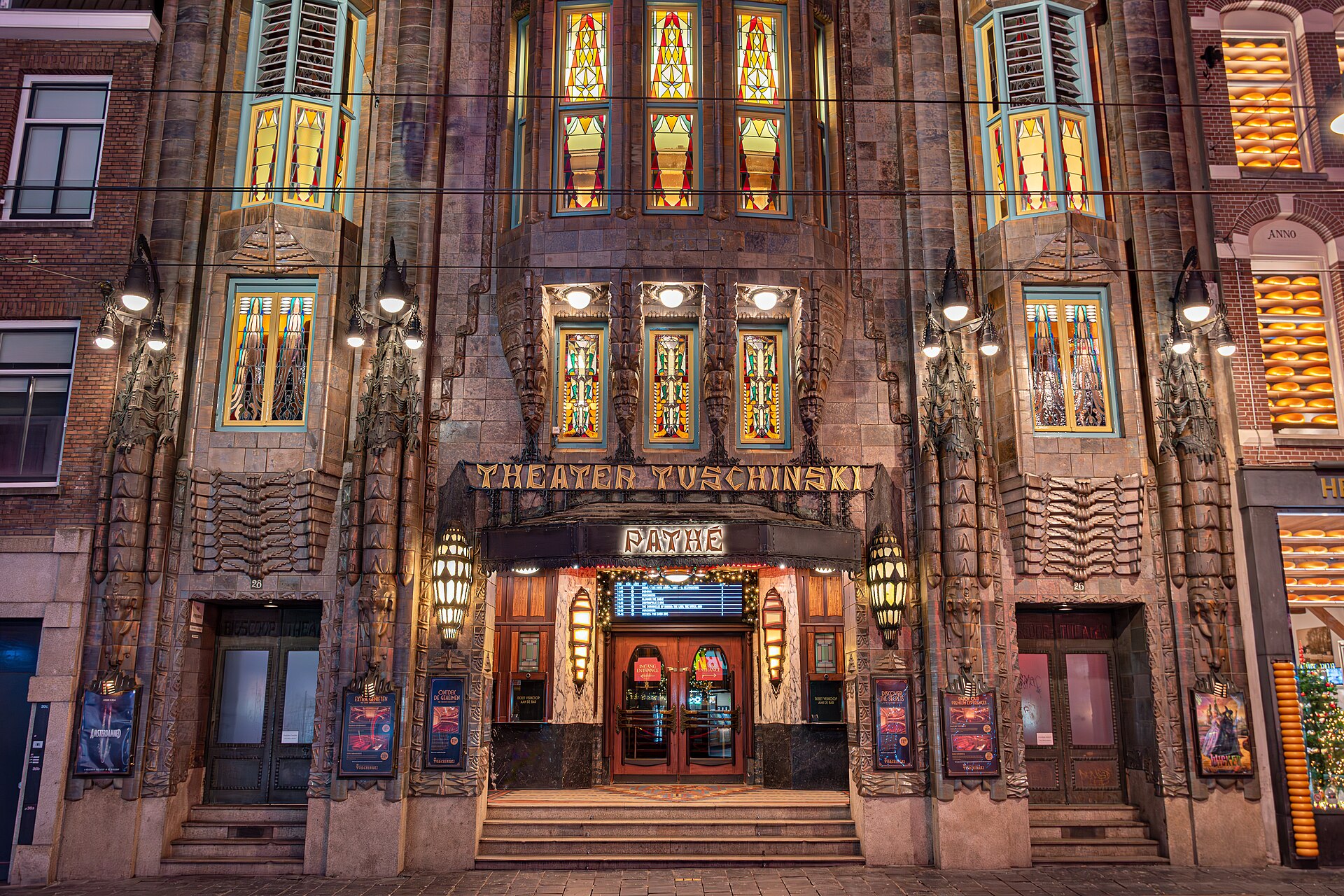
Theater Tuschinski: the cinema a Polish immigrant built, and that outlived him
Redactie Amsterdammers.love · 12 min read
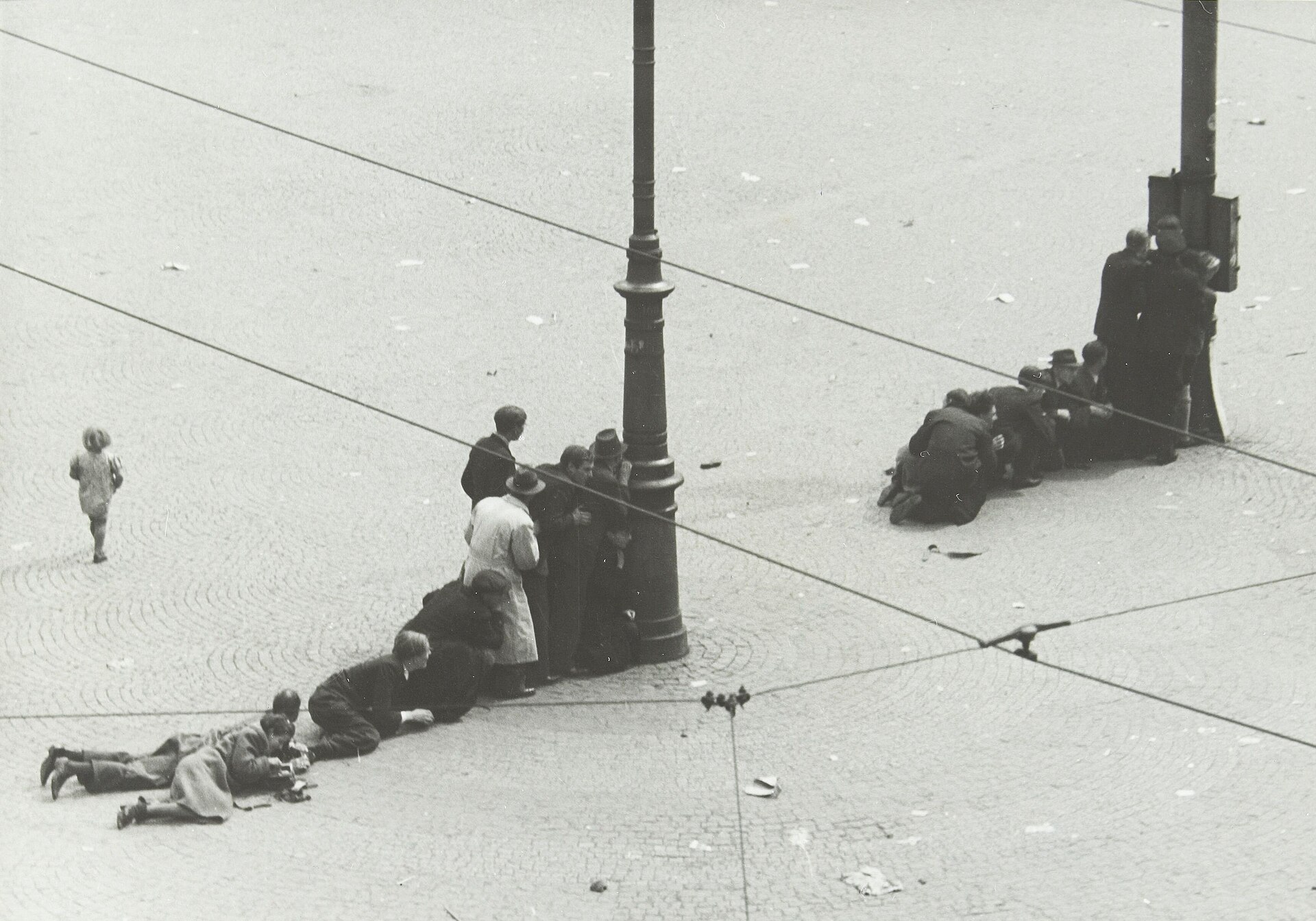
The Dam shooting of 7 May 1945: the massacre on the day Amsterdam already felt liberated
Redactie Amsterdammers.love · 11 min read
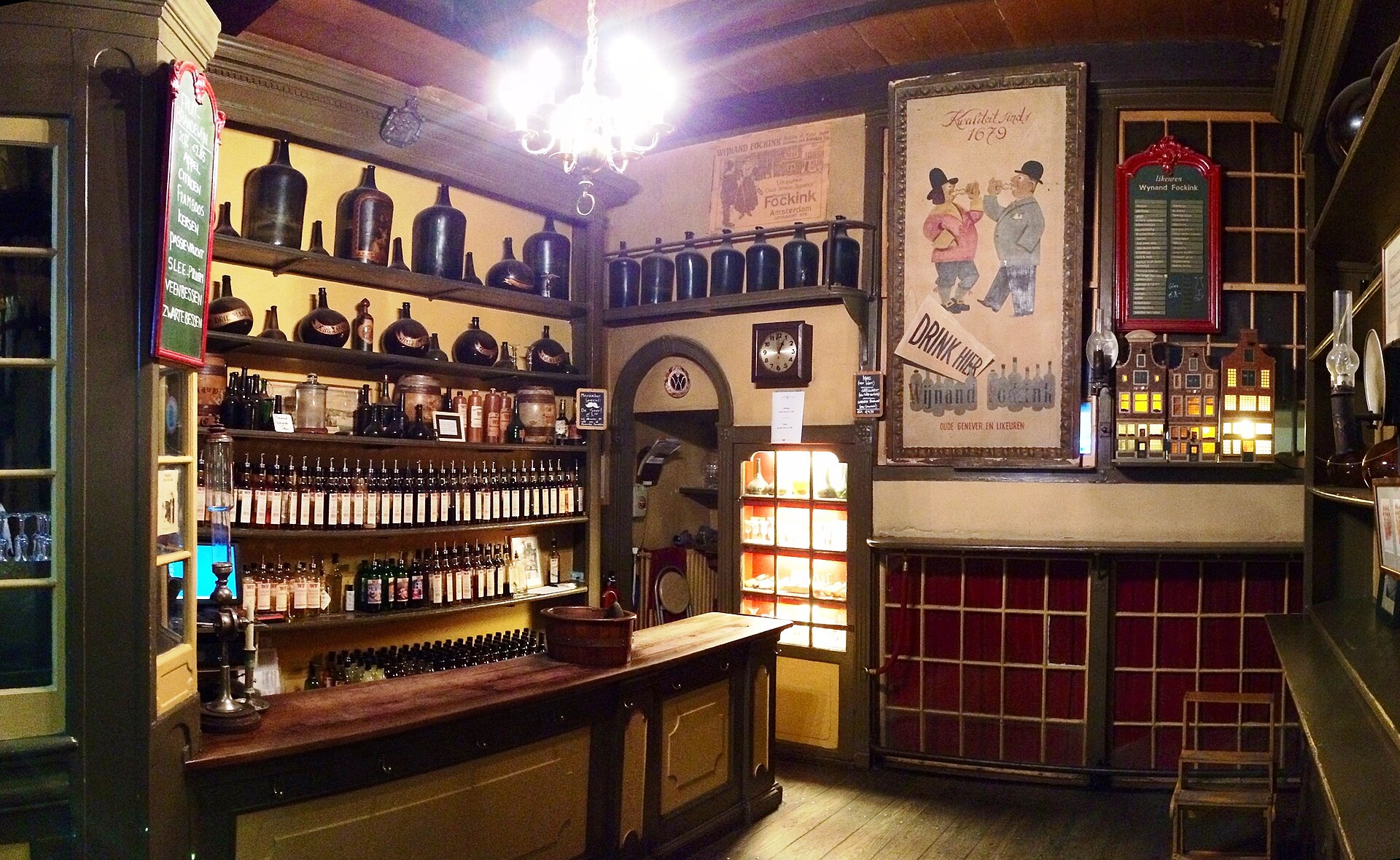
Wynand Fockink: the tiny Amsterdam liqueur house that has poured jenever for over three centuries
Redactie Amsterdammers.love · 10 min read
The 1928 Olympic Games: how Amsterdam invented the eternal flame
Redactie Amsterdammers.love · 11 min read
Otter with pup filmed in Diemerpark: the first otter birth in Amsterdam since 1963
Redactie Amsterdammers.love · 6 min read
21 November 1981: the day Amsterdam saw its largest-ever peace demonstration
Redactie Amsterdammers.love · 7 min read