Shop · week 48
P.G.C. Hajenius: the nineteen-year-old who started Amsterdam's most famous cigar shop
In 1826, a nineteen-year-old man from Doesburg left his hometown to build a life in Amsterdam. He started a small cigar business inside a hotel called De Rijnstroom. Nearly two hundred years later, his name still shines in gold letters above one of the most photographed shopfronts on the Rokin. This is the story of P.G.C. Hajenius: a nineteenth-century entrepreneur, a family that carried the business forward, and a building that is now a national heritage monument.
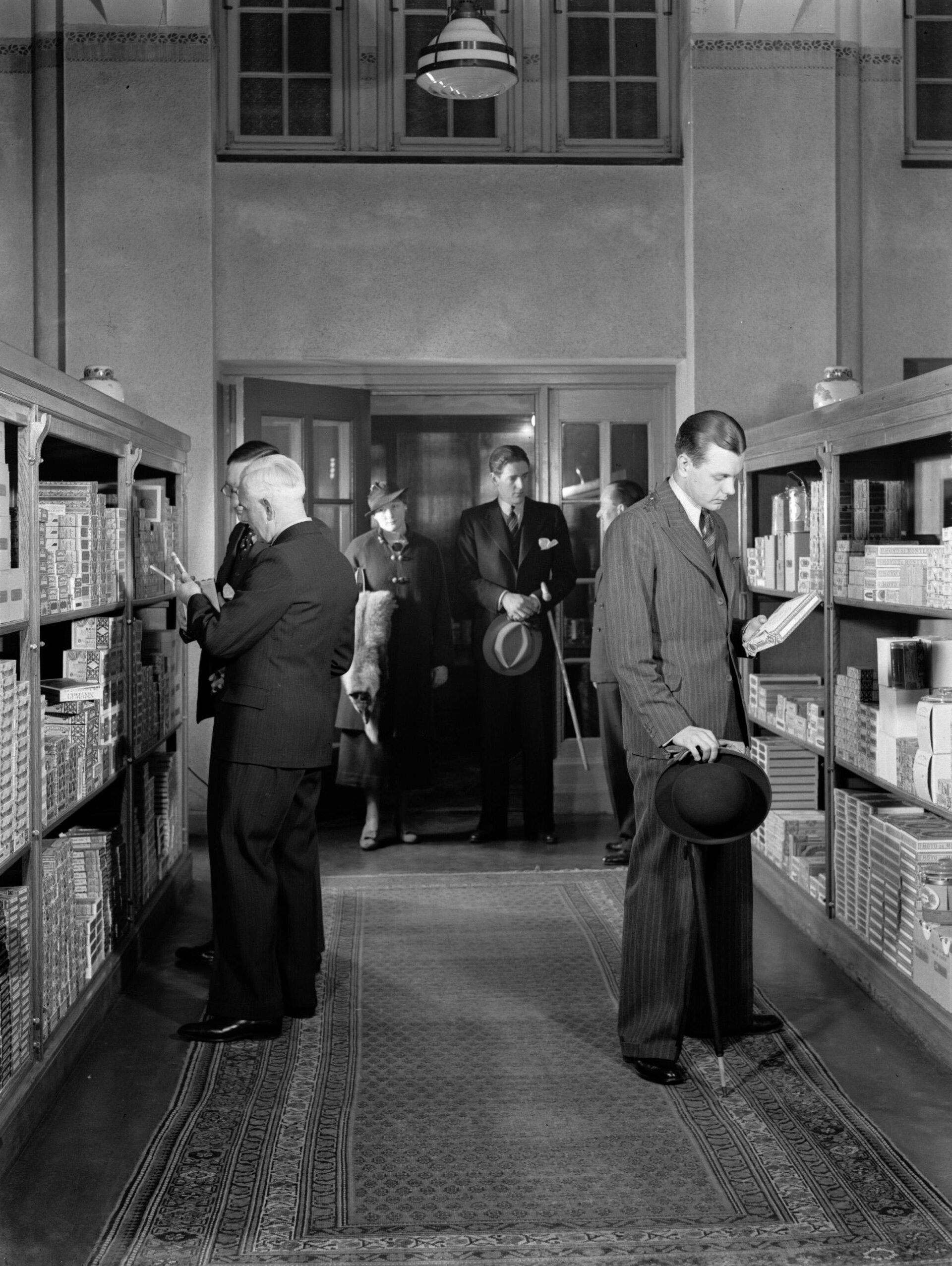
A nineteen-year-old from Doesburg
Amsterdam, 1826. A city full of trade, full of harbours, and full of opportunity for anyone willing to work hard. Among the people drawn to the capital to try their luck was a nineteen-year-old man from the Gelderland town of Doesburg: Pantaleon Gerhard Coenraad Hajenius. His name would still be shining in gold letters above an Amsterdam shopfront more than a century and a half later, though he of course had no way of knowing that at the time. He was simply a young man looking to build a new life in Amsterdam.
Hajenius chose the tobacco trade, a sector that was developing rapidly in the nineteenth century. Cigars were a sought-after product among the well-to-do, and with the right mix of quality and customer service, the trade could yield a thriving business. Hajenius started small, opening a modest cigar shop within the walls of a hotel.
A hotel called De Rijnstroom
That first shop of Hajenius's was located inside Hotel De Rijnstroom. Sources disagree on the hotel's exact location: some place it on the Dam, others name the Warmoesstraat or the Vijgendam as the address. What is certain is that the name of that first home never left Hajenius again. Decades later, when the business moved to an entirely new building on the Rokin, the name De Rijnstroom was carved into the facade, as a tribute to the place where it all began.
The nineteenth century was a period of steady growth for the young enterprise. From that first hotel shop, the business moved to a location on the Dam, then the beating heart of Amsterdam commerce. From 1856 onward, members of the Nyman family also joined the firm as partners. That family would remain closely tied to Hajenius well into the twentieth century: portraits of Hendrik Willem Nijman and his son Neander Nijman, two successors who steered the company through later generations, still hang in the shop's Gentlemen's Room today.
From the Dam to the Rokin
By the early twentieth century, Hajenius had grown into a respected name in the Amsterdam cigar trade, with customers reaching well beyond the country's borders. The premises on the Dam had become too small and too modest for the firm's ambitions. A bold new step was taken: a purpose-built building on the Rokin, on the site of what had previously been the plots Rokin 92, 94 and 96. The older buildings there were demolished by the firm Staal & Haalmeyer, commissioned by Hajenius partner A.J.N. Nyman.
The new building rose in 1914 and 1915. Above the entrance, the facade was given a place for a royal coat of arms bearing the motto 'je maintiendrai', together with the text 'P.G.C. HAJENIUS' and the year 'ANNO 1914'. That coat of arms leads many visitors to wonder whether Hajenius was an official royal purveyor. No hard documentation of a formal royal appointment has been found; several publications do describe the firm as a supplier that built an international reputation among a wealthy, partly aristocratic clientele. Those are two different things, and it is worth stating that distinction clearly here.
The Van Gendt brothers and a facade of German sandstone
For the design of the new building, the firm turned to a well-regarded firm of architects: the Van Gendt brothers. The exterior was designed by Adolf Daniël Nicolaas van Gendt, son of the renowned nineteenth-century Amsterdam architect Adolf Leonard van Gendt, who among other buildings designed the Concertgebouw. The richly decorated interior was created jointly by the brothers A.D.N. van Gendt and J.G. van Gendt.
The facade is built in a restrained, classicist style described in heritage literature as 'Um 1800-stijl': a reference to building styles from around 1800, with a certain monumental calm. The material is Obernkirchen sandstone, a German sandstone widely used at the time for representative buildings, set on a granite plinth. The result is a facade that stands out among the canal-house-style buildings of the Rokin, without being ostentatious.
Inside: marble, brass and Delft pottery
Anyone stepping into Hajenius today walks into an interior that remains, in its essence, much as the Van Gendt brothers designed it more than a century ago. The ceiling is decorated and painted in a golden bronze colour, divided into panels, lit by two brass chandeliers. The walls and counters are finished in several types of marble, combined with wooden panelling inlaid with bronze decorative work. Look closely at that woodwork and you'll spot tiny dots of mother-of-pearl, a subtle detail in keeping with the shop's polished character.
On the shelves stand tobacco jars of Delft pottery, painted with Chinese scenes — a nod to the international trade history that once linked tobacco and porcelain during the Dutch Golden Age. On either side of the entrance are radiator covers with decorative latticework, and above the door is a skylight with distinctive wooden tracery. Further inside, an exhibition room holds two fine cigar cabinets inlaid with woodwork, along with a so-called climate room: a space originally meant for tasting and storing cigars at the right temperature and humidity.
According to tradition, the original hardstone floors with mosaic patterning still lie beneath the current carpeting, once visible but hidden from view at some point. Visitor accounts also describe an oak entrance with heavy doors and copper fittings, counters of Italian marble, mahogany cabinets, and a Gentlemen's Room with an antique meeting table. Not all of these details can be backed by hard sources, but they recur across several independent descriptions.
A national monument since 2001
The remarkable state of preservation of both the exterior and interior did not go unnoticed. On 11 December 2001, the building on the Rokin, registered under monument number 518452, was added to the national heritage register. The official listing states that both the exterior and interior have survived in reasonably good condition, and that the building is of general interest to Dutch heritage conservation. That places Hajenius among a select group of Amsterdam shop buildings where not just the facade, but the complete nineteenth- and twentieth-century shop interior, is legally protected.
That matters, because many historic shop interiors in Dutch city centres disappeared, were demolished, or were radically altered during the twentieth century as new owners placed different demands on their retail space. That Hajenius has survived all those changes is partly thanks to the nature of the product: a cigar shop that deliberately trades on tradition and craftsmanship has less reason to replace a nineteenth-century interior with a modern retail concept. At Hajenius, the past is not a burden but part of the sales story.
Visitors, customers, and a city that changed around it
In the more than one hundred years the business has now been based on the Rokin, much has changed in the surrounding streetscape. The Rokin itself underwent dramatic transformations, from a busy waterway to a traffic artery and, in recent decades, to a street with a metro line running beneath the pavement. Hajenius remained, like a fixed anchor, in the same spot. Various accounts of the shop mention prominent citizens, well-known industrialists and wealthy customers from the Netherlands and abroad who passed through its doors over the years. Concrete, independently verifiable stories naming specific visitors are scarce, however, and are therefore not presented in this article as established fact.
What can be stated with confidence is that the shop has for decades been a regular destination for lovers of Dutch and Cuban cigars, and that over the course of the twentieth century the company grew into an established name well beyond Amsterdam. Early this century, the Hajenius brand, like many other traditional tobacco companies, became part of a larger international group: Scandinavian Tobacco Group. The shop on the Rokin itself, however, has continued to offer the intimate, small-scale experience that has characterised it since it opened in 1915.
Hajenius today
Today, P.G.C. Hajenius is still located at Rokin 92-96, in the same building the Van Gendt brothers designed more than a century ago. The shop is open daily to customers and tourists, and is considered one of the best-known cigar shops in Europe. Visitors need not be smokers to be struck by the interior: the marble, the brass, the woodcarving and the scent of tobacco quickly turn a visit into a small journey back to the Amsterdam of a hundred years ago.
For a city that is constantly changing, that is no small thing. Shop premises change owners, retail formats disappear, and facades are updated to suit the fashions of the day. That the nineteen-year-old from Doesburg who started with a small cigar shop in 1826 ultimately left behind a firm that still operates under his own name nearly two hundred years later says something about the combination of solid craftsmanship, a recognisable product and, not least, a line of successors who chose to build on what already existed rather than discard it.
Sources
This article draws on the official listing of the national monument in the heritage register of the Rijksdienst voor het Cultureel Erfgoed (monument number 518452, registered on 11 December 2001), supplemented with information from iAmsterdam on the current shop, background articles on the history of Hajenius (including mForAmsterdam, 2020, and Tweedland The Gentleman's Club, 2013), and the English-language Wikipedia article on the Rokin. Sources consulted disagree on the exact location of the first 'De Rijnstroom' hotel in 1826; this is noted in the text. A possible formal status as royal purveyor could not be independently confirmed and is therefore not presented as established fact in this article. The 1935 archive photograph of customers in the Hajenius shop comes from the Fotocollectie Van de Poll, held by the Nationaal Archief.
Nieuwsbrief
Krijg een unieke kijk van en over Amsterdam in je mailbox
De laatste verhalen, en af en toe een verrassing uit het archief.
Comments (0)
Log in to leave a comment.
More stories about Amsterdam
All stories →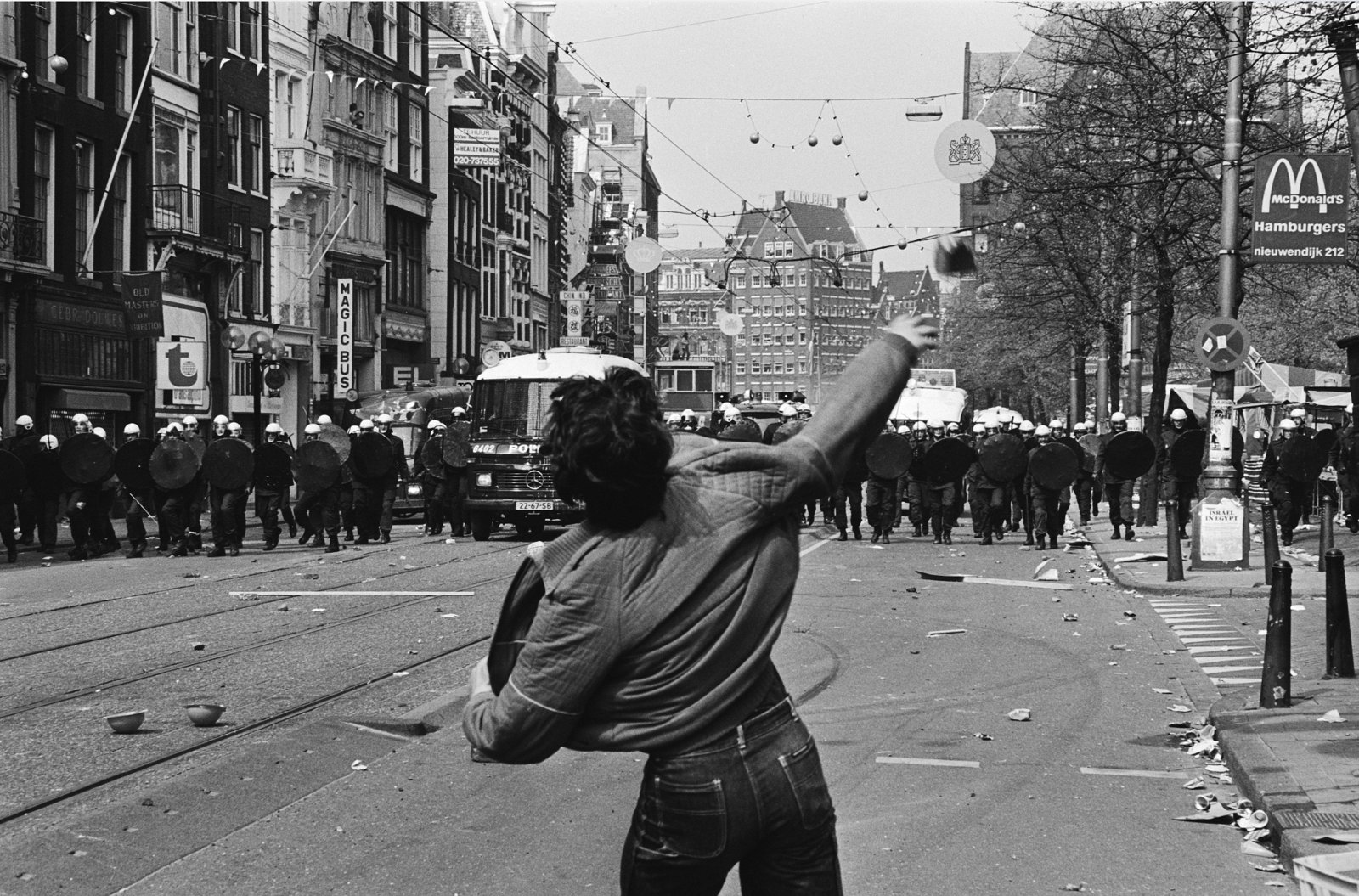
No home, no coronation: the day Amsterdam became a battlefield
Redactie Amsterdammers.love · 17 min read
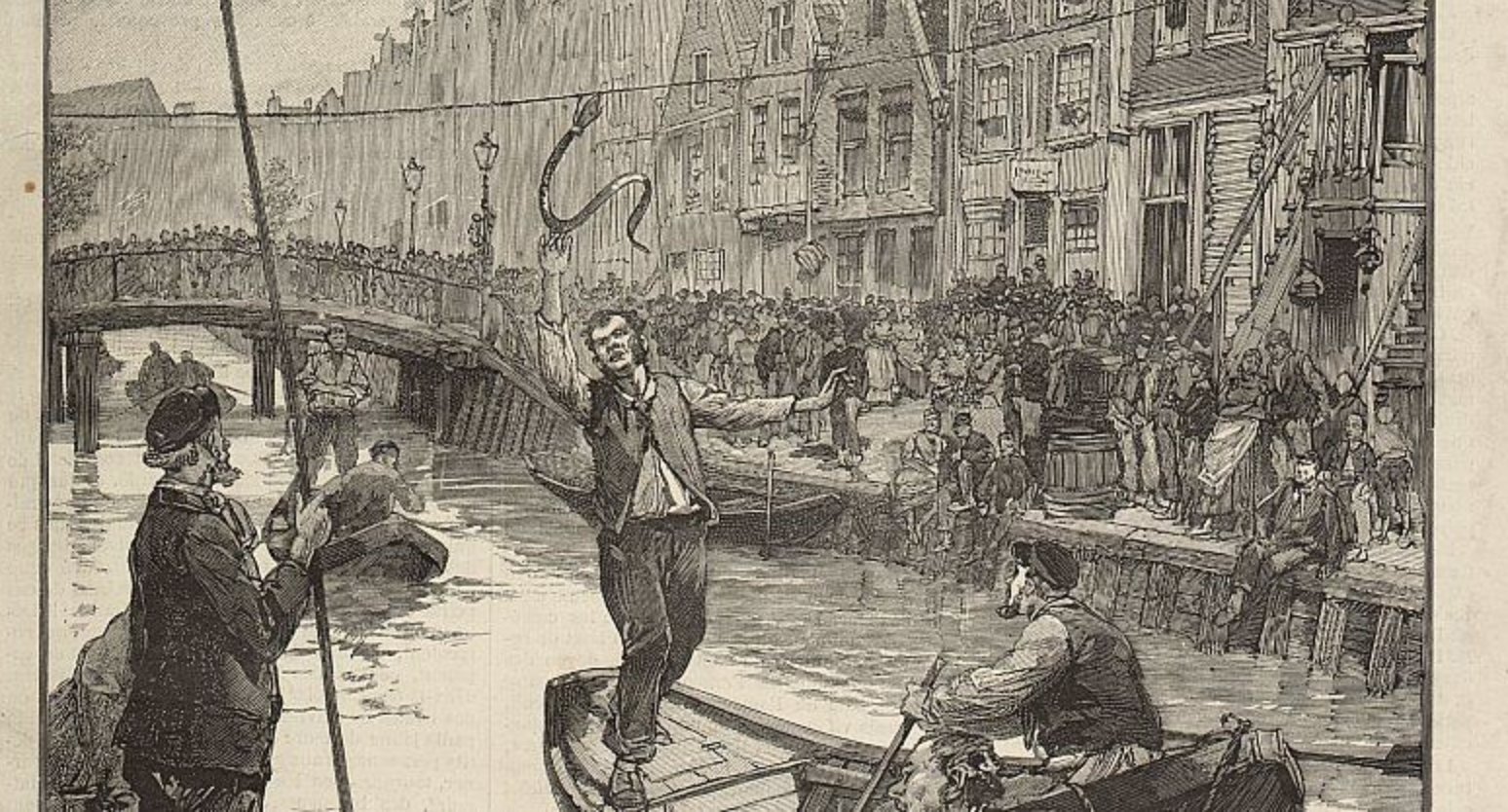
The Eel Riot of 1886: how a forbidden game in the Jordaan ended in 26 deaths
Redactie Amsterdammers.love · 14 min read
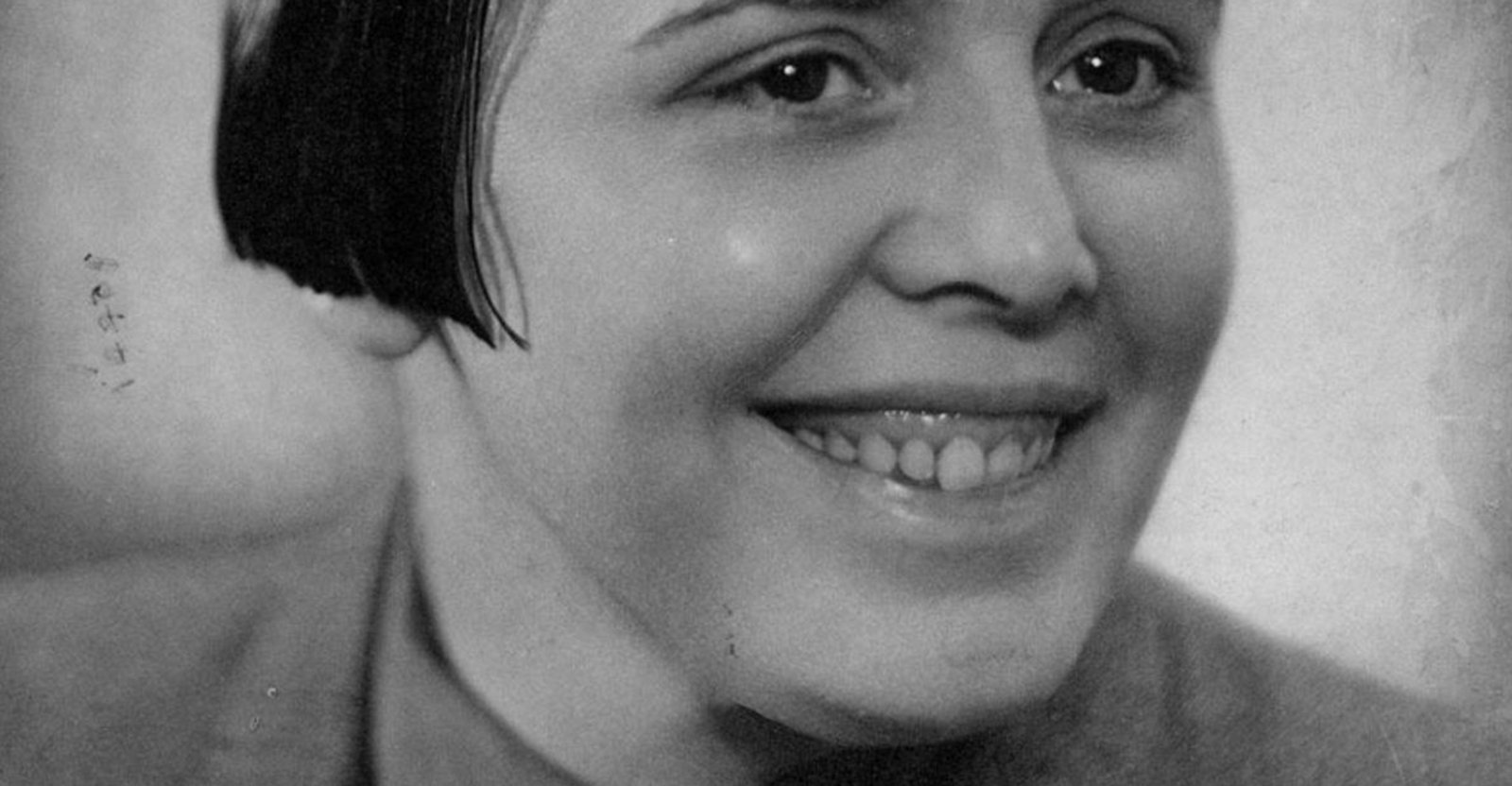
Bet van Beeren (1902–1967): the queen of the Zeedijk who made her own rules
Redactie Amsterdammers.love · 16 min read
The 1928 Olympic Games: how Amsterdam invented the eternal flame
Redactie Amsterdammers.love · 11 min read

Hans van Onna: the Amsterdammer who was still teaching exercise classes to other older people at 96
Redactie Amsterdammers.love · 13 min read
Annick van Hardeveld (21): the Amsterdam woman shot dead on the day of liberation
Redactie Amsterdammers.love · 14 min read